Readings Newsletter
Become a Readings Member to make your shopping experience even easier.
Sign in or sign up for free!
You’re not far away from qualifying for FREE standard shipping within Australia
You’ve qualified for FREE standard shipping within Australia
The cart is loading…


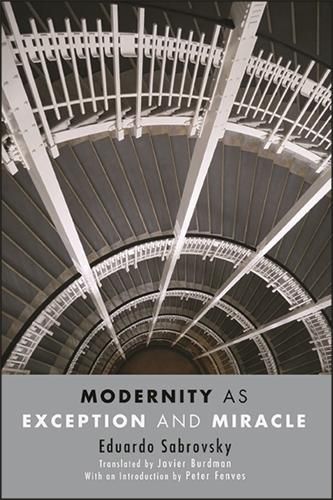
Translated from the Spanish De lo extraordinario: Nominalismo y Modernidad, this book argues that a defining aspect of modernity is an ever-increasing pursuit of, and need for, what Eduardo Sabrovsky calls the extraordinary, a term that encompasses both the exception and the miraculous. Sabrovsky shows the degree to which Robert Musil’s novel The Man without Qualities functions as a paradoxical paradigm of the extraordinary, and he extends the theoretical insights drawn from Musil’s magisterial work through a series of inquiries into cardinal elements of modern literature, material culture, historiography, physical science, psychoanalysis, and political theory. Sabrovsky demonstrates how the extraordinary condition of modernity emerges from the debates conducted by the last representatives of medieval scholasticism in which nominalism defeated realism, and he resituates the results of this triumph of nominalism in the writings of Friedrich Nietzsche, Theodor Adorno, Walter Benjamin, and Georges Bataille, among others.
$9.00 standard shipping within Australia
FREE standard shipping within Australia for orders over $100.00
Express & International shipping calculated at checkout
Stock availability can be subject to change without notice. We recommend calling the shop or contacting our online team to check availability of low stock items. Please see our Shopping Online page for more details.
Translated from the Spanish De lo extraordinario: Nominalismo y Modernidad, this book argues that a defining aspect of modernity is an ever-increasing pursuit of, and need for, what Eduardo Sabrovsky calls the extraordinary, a term that encompasses both the exception and the miraculous. Sabrovsky shows the degree to which Robert Musil’s novel The Man without Qualities functions as a paradoxical paradigm of the extraordinary, and he extends the theoretical insights drawn from Musil’s magisterial work through a series of inquiries into cardinal elements of modern literature, material culture, historiography, physical science, psychoanalysis, and political theory. Sabrovsky demonstrates how the extraordinary condition of modernity emerges from the debates conducted by the last representatives of medieval scholasticism in which nominalism defeated realism, and he resituates the results of this triumph of nominalism in the writings of Friedrich Nietzsche, Theodor Adorno, Walter Benjamin, and Georges Bataille, among others.
Search our extensive online catalogue.
