Readings Newsletter
Become a Readings Member to make your shopping experience even easier.
Sign in or sign up for free!
You’re not far away from qualifying for FREE standard shipping within Australia
You’ve qualified for FREE standard shipping within Australia
The cart is loading…


This title is printed to order. This book may have been self-published. If so, we cannot guarantee the quality of the content. In the main most books will have gone through the editing process however some may not. We therefore suggest that you be aware of this before ordering this book. If in doubt check either the author or publisher’s details as we are unable to accept any returns unless they are faulty. Please contact us if you have any questions.
Until now, the academic foundations of media ecology have been passed down primarily in the form of edited volumes, often by students of Neil Postman, or are limited to a focus on Marshall McLuhan and/or Postman or some other individual important to the field. Those volumes are invaluable in pointing to key ideas in the field; they provide an important and informed account of the fundamentals of media ecology as set forth at the field’s inception. Yet there is more to the story.
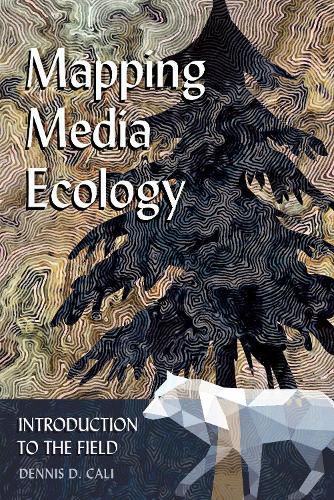
Offering an accessible introduction, and written from the perspective of a second generation scholar, this single-authored work provides a unified, systematic framework for the study of media ecology. It identifies the key themes, processes, and figures in media ecology that have coalesced over the last few decades and presents an elegant schema with which to engage future exploration of the role of media in shaping culture and consciousness.
Dennis D. Cali offers a survey of a field as consequential as it is fascinating. Designed to be used primarily in media and communication courses, the book’s goal is to hone insight into the role of media in society and to extend the understanding of the themes, processes, and interactions of media ecology to an ever-broader intellectual community.
$9.00 standard shipping within Australia
FREE standard shipping within Australia for orders over $100.00
Express & International shipping calculated at checkout
Stock availability can be subject to change without notice. We recommend calling the shop or contacting our online team to check availability of low stock items. Please see our Shopping Online page for more details.
This title is printed to order. This book may have been self-published. If so, we cannot guarantee the quality of the content. In the main most books will have gone through the editing process however some may not. We therefore suggest that you be aware of this before ordering this book. If in doubt check either the author or publisher’s details as we are unable to accept any returns unless they are faulty. Please contact us if you have any questions.
Until now, the academic foundations of media ecology have been passed down primarily in the form of edited volumes, often by students of Neil Postman, or are limited to a focus on Marshall McLuhan and/or Postman or some other individual important to the field. Those volumes are invaluable in pointing to key ideas in the field; they provide an important and informed account of the fundamentals of media ecology as set forth at the field’s inception. Yet there is more to the story.
Offering an accessible introduction, and written from the perspective of a second generation scholar, this single-authored work provides a unified, systematic framework for the study of media ecology. It identifies the key themes, processes, and figures in media ecology that have coalesced over the last few decades and presents an elegant schema with which to engage future exploration of the role of media in shaping culture and consciousness.
Dennis D. Cali offers a survey of a field as consequential as it is fascinating. Designed to be used primarily in media and communication courses, the book’s goal is to hone insight into the role of media in society and to extend the understanding of the themes, processes, and interactions of media ecology to an ever-broader intellectual community.
Search our extensive online catalogue.
