Readings Newsletter
Become a Readings Member to make your shopping experience even easier.
Sign in or sign up for free!
You’re not far away from qualifying for FREE standard shipping within Australia
You’ve qualified for FREE standard shipping within Australia
The cart is loading…


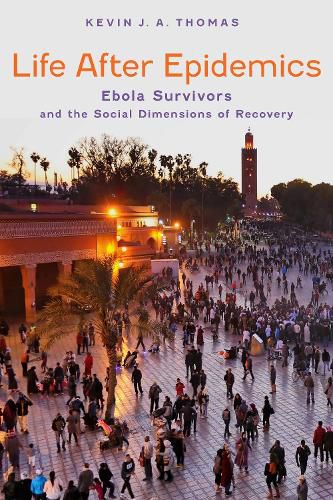
Examining the long-term social consequences of epidemic survival in post-Ebola West Africa.
What happens to survivors when an epidemic ends and the headlines fade? In Life After Epidemics, Kevin J. A. Thomas confronts this pressing question through the voices of those who lived through the world's deadliest Ebola outbreak. Based on interviews with 250 survivors in Liberia and Sierra Leone, the book reveals how, years after their recovery, many continue to endure long-term health issues, economic hardship, and social exclusion, conditions which are often exacerbated by their preexisting marginalization.
The 2014-2016 West African Ebola epidemic left more than 17,000 survivors. Yet even as governments and international agencies celebrated medical successes and invested in disease surveillance and vaccine development, they offered minimal attention to the social realities unfolding in the epidemic's aftermath. This book documents how the lack of sustained social response through support for livelihoods, reintegration, and long-term care has had lasting consequences on former patients and their communities. Thomas argues that these devastating consequences are even worse for those already facing poverty, stigma, and social invisibility.
Yet amid these challenges, many survivors have found ways to reframe their experiences, participate in recovery efforts, and forge new roles within their communities. Their stories speak not only to resilience but to the unfinished work of public health systems that still treat survival as a conclusion rather than a beginning. Life After Epidemics makes the case that addressing the aftermath of outbreaks must go beyond emergency medical responses to encompass the complex social dimensions that shape recovery while reconsidering what it means to truly heal after crisis.
$9.00 standard shipping within Australia
FREE standard shipping within Australia for orders over $100.00
Express & International shipping calculated at checkout
Stock availability can be subject to change without notice. We recommend calling the shop or contacting our online team to check availability of low stock items. Please see our Shopping Online page for more details.
Examining the long-term social consequences of epidemic survival in post-Ebola West Africa.
What happens to survivors when an epidemic ends and the headlines fade? In Life After Epidemics, Kevin J. A. Thomas confronts this pressing question through the voices of those who lived through the world's deadliest Ebola outbreak. Based on interviews with 250 survivors in Liberia and Sierra Leone, the book reveals how, years after their recovery, many continue to endure long-term health issues, economic hardship, and social exclusion, conditions which are often exacerbated by their preexisting marginalization.
The 2014-2016 West African Ebola epidemic left more than 17,000 survivors. Yet even as governments and international agencies celebrated medical successes and invested in disease surveillance and vaccine development, they offered minimal attention to the social realities unfolding in the epidemic's aftermath. This book documents how the lack of sustained social response through support for livelihoods, reintegration, and long-term care has had lasting consequences on former patients and their communities. Thomas argues that these devastating consequences are even worse for those already facing poverty, stigma, and social invisibility.
Yet amid these challenges, many survivors have found ways to reframe their experiences, participate in recovery efforts, and forge new roles within their communities. Their stories speak not only to resilience but to the unfinished work of public health systems that still treat survival as a conclusion rather than a beginning. Life After Epidemics makes the case that addressing the aftermath of outbreaks must go beyond emergency medical responses to encompass the complex social dimensions that shape recovery while reconsidering what it means to truly heal after crisis.
Search our extensive online catalogue.
