Readings Newsletter
Become a Readings Member to make your shopping experience even easier.
Sign in or sign up for free!
You’re not far away from qualifying for FREE standard shipping within Australia
You’ve qualified for FREE standard shipping within Australia
The cart is loading…


This title is printed to order. This book may have been self-published. If so, we cannot guarantee the quality of the content. In the main most books will have gone through the editing process however some may not. We therefore suggest that you be aware of this before ordering this book. If in doubt check either the author or publisher’s details as we are unable to accept any returns unless they are faulty. Please contact us if you have any questions.
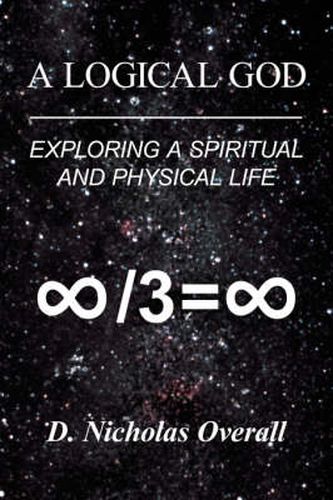
The initial chapters of A Logical God investigate the development of early religious motivations that caused a wide variety of unique beliefs to evolve. Most early civilizations were curious, amazed or frightened by death and the apparent power of unknown spirits experienced during violent changes in the earth’‘s environment such as storms or geotectonic eruptions. However, the silence and beauty of the night skies probably created different thoughts of wonderment about how these natural phenomena began. Some cultures chose to invent deities to be the sources of power over everything known and unknown. The topics of science and religion are also investigated early in A Logical God. As people became more knowledgeable of basic science they were drawn to learn more about the universe and the many types of energy involved with its creation. Therefore, the theories of evolution and creation are compared to evaluate beliefs in religion versus naturalism. Early chapters also summarize the development of major organized religions beliefs to permit a better understanding. Four subsequent chapters discuss the specific beliefs of the Judeo-Christian religions. The latter half of the book explores basic topics such as the God of the Jews and Christians, dying and spiritual life. A Logical God closes by discussing everyone’‘s responsibility of utilizing their faith to take action toward truly improving life on earth. By strengthening and utilizing spiritual faith, individuals can unite and create positive influences on society and even direct politicians and technology to focus more on communities’‘ most basic problems.
$9.00 standard shipping within Australia
FREE standard shipping within Australia for orders over $100.00
Express & International shipping calculated at checkout
Stock availability can be subject to change without notice. We recommend calling the shop or contacting our online team to check availability of low stock items. Please see our Shopping Online page for more details.
This title is printed to order. This book may have been self-published. If so, we cannot guarantee the quality of the content. In the main most books will have gone through the editing process however some may not. We therefore suggest that you be aware of this before ordering this book. If in doubt check either the author or publisher’s details as we are unable to accept any returns unless they are faulty. Please contact us if you have any questions.
The initial chapters of A Logical God investigate the development of early religious motivations that caused a wide variety of unique beliefs to evolve. Most early civilizations were curious, amazed or frightened by death and the apparent power of unknown spirits experienced during violent changes in the earth’‘s environment such as storms or geotectonic eruptions. However, the silence and beauty of the night skies probably created different thoughts of wonderment about how these natural phenomena began. Some cultures chose to invent deities to be the sources of power over everything known and unknown. The topics of science and religion are also investigated early in A Logical God. As people became more knowledgeable of basic science they were drawn to learn more about the universe and the many types of energy involved with its creation. Therefore, the theories of evolution and creation are compared to evaluate beliefs in religion versus naturalism. Early chapters also summarize the development of major organized religions beliefs to permit a better understanding. Four subsequent chapters discuss the specific beliefs of the Judeo-Christian religions. The latter half of the book explores basic topics such as the God of the Jews and Christians, dying and spiritual life. A Logical God closes by discussing everyone’‘s responsibility of utilizing their faith to take action toward truly improving life on earth. By strengthening and utilizing spiritual faith, individuals can unite and create positive influences on society and even direct politicians and technology to focus more on communities’‘ most basic problems.
Search our extensive online catalogue.
