Readings Newsletter
Become a Readings Member to make your shopping experience even easier.
Sign in or sign up for free!
You’re not far away from qualifying for FREE standard shipping within Australia
You’ve qualified for FREE standard shipping within Australia
The cart is loading…


This title is printed to order. This book may have been self-published. If so, we cannot guarantee the quality of the content. In the main most books will have gone through the editing process however some may not. We therefore suggest that you be aware of this before ordering this book. If in doubt check either the author or publisher’s details as we are unable to accept any returns unless they are faulty. Please contact us if you have any questions.
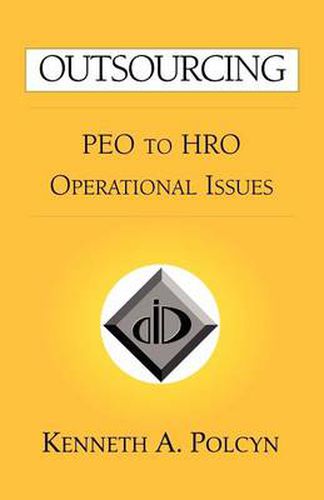
Outsourcing products and services is not a new concept. Governments, businesses and individuals have done so for centuries. However, in the 1960s and 1970s, driven by tax laws, it became a unique business type called Staff/Employee Leasing, eventually evolving in the early 1990s to Professional Employer Organizations (PEOs). Companies contracted out their administrative processes to PEOs who in turn become co-employers and risk sharers. But the world of the PEO, and outsourcing in general, has changed dramatically over the past 15 years and continues to evolve. The Internet, new computer technology, competition and global economy have been some of the contributing factors. Based on the experience of the author in the outsourcing arena, the book addresses the factors required for creating a strong and competitive outsourcing business model, along with the hazards involved. A point made throughout the book is the requirement to carefully select with whom you want to business from both the outsourcing provider and buyer point of view. The initial focus is upon the importance of understanding the marketplace and required related research and planning. Then, client selection and retention is addressed. Next the requirement for quality staff education and training is discussed, followed by retaining and managing core knowledge. Because of recent unethical business behavior several essays treat trust as a value proposition for the industry to prosper. Completing the book are essays discussing outsourcing history, industry trends, what is being outsourced and why, and the movement of outsourcing to a broader meaning in the U.S. as well as worldwide, looking at some forces working for and against.
$9.00 standard shipping within Australia
FREE standard shipping within Australia for orders over $100.00
Express & International shipping calculated at checkout
Stock availability can be subject to change without notice. We recommend calling the shop or contacting our online team to check availability of low stock items. Please see our Shopping Online page for more details.
This title is printed to order. This book may have been self-published. If so, we cannot guarantee the quality of the content. In the main most books will have gone through the editing process however some may not. We therefore suggest that you be aware of this before ordering this book. If in doubt check either the author or publisher’s details as we are unable to accept any returns unless they are faulty. Please contact us if you have any questions.
Outsourcing products and services is not a new concept. Governments, businesses and individuals have done so for centuries. However, in the 1960s and 1970s, driven by tax laws, it became a unique business type called Staff/Employee Leasing, eventually evolving in the early 1990s to Professional Employer Organizations (PEOs). Companies contracted out their administrative processes to PEOs who in turn become co-employers and risk sharers. But the world of the PEO, and outsourcing in general, has changed dramatically over the past 15 years and continues to evolve. The Internet, new computer technology, competition and global economy have been some of the contributing factors. Based on the experience of the author in the outsourcing arena, the book addresses the factors required for creating a strong and competitive outsourcing business model, along with the hazards involved. A point made throughout the book is the requirement to carefully select with whom you want to business from both the outsourcing provider and buyer point of view. The initial focus is upon the importance of understanding the marketplace and required related research and planning. Then, client selection and retention is addressed. Next the requirement for quality staff education and training is discussed, followed by retaining and managing core knowledge. Because of recent unethical business behavior several essays treat trust as a value proposition for the industry to prosper. Completing the book are essays discussing outsourcing history, industry trends, what is being outsourced and why, and the movement of outsourcing to a broader meaning in the U.S. as well as worldwide, looking at some forces working for and against.
Search our extensive online catalogue.
