Readings Newsletter
Become a Readings Member to make your shopping experience even easier.
Sign in or sign up for free!
You’re not far away from qualifying for FREE standard shipping within Australia
You’ve qualified for FREE standard shipping within Australia
The cart is loading…


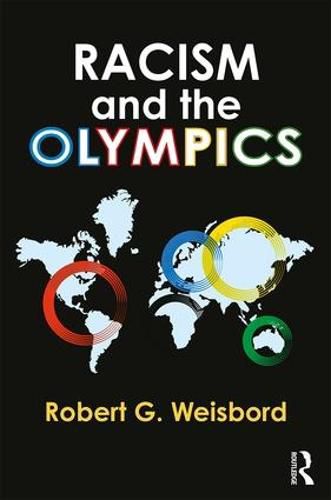
Sports are the opiate of the people, particularly in the United States, Europe, and parts of South America. Globally, billions of fans feverishly focus on the summer and winter Olympics. In theory, international fraternalism is boosted by these friendly competitions, but often national rivalries eclipse the theoretical amity. How the Olympics have dealt with racism over the years offers a window to better understanding these dynamics. Since their revival in 1896, the modern Olympics were periodically agitated by political and moral conundrums. Racial tensions, the topic of this volume, reached their apex under the polarizing presidency of Avery Brundage. Race in sports cannot be disentangled from societal problems, nor can race or sports be fully understood separately. Racial conflict must be contextualized. Racism and the Olympics explores the racial landscape against which a number of major disputes evolved. The book covers various topics and events in history that portray discrimination within Olympic games, such as the Nazi games of 1936, the black American protest on the victory stand in Mexico City’s Olympics, as well as international political forces that removed South Africa and Rhodesia from the Olympics. Robert G. Weisbord considers the role of international politics and the criteria that should be used to determine nations that are selected to take part in and serve as venues for the Olympic Games.
$9.00 standard shipping within Australia
FREE standard shipping within Australia for orders over $100.00
Express & International shipping calculated at checkout
Stock availability can be subject to change without notice. We recommend calling the shop or contacting our online team to check availability of low stock items. Please see our Shopping Online page for more details.
Sports are the opiate of the people, particularly in the United States, Europe, and parts of South America. Globally, billions of fans feverishly focus on the summer and winter Olympics. In theory, international fraternalism is boosted by these friendly competitions, but often national rivalries eclipse the theoretical amity. How the Olympics have dealt with racism over the years offers a window to better understanding these dynamics. Since their revival in 1896, the modern Olympics were periodically agitated by political and moral conundrums. Racial tensions, the topic of this volume, reached their apex under the polarizing presidency of Avery Brundage. Race in sports cannot be disentangled from societal problems, nor can race or sports be fully understood separately. Racial conflict must be contextualized. Racism and the Olympics explores the racial landscape against which a number of major disputes evolved. The book covers various topics and events in history that portray discrimination within Olympic games, such as the Nazi games of 1936, the black American protest on the victory stand in Mexico City’s Olympics, as well as international political forces that removed South Africa and Rhodesia from the Olympics. Robert G. Weisbord considers the role of international politics and the criteria that should be used to determine nations that are selected to take part in and serve as venues for the Olympic Games.
Search our extensive online catalogue.
