Readings Newsletter
Become a Readings Member to make your shopping experience even easier.
Sign in or sign up for free!
You’re not far away from qualifying for FREE standard shipping within Australia
You’ve qualified for FREE standard shipping within Australia
The cart is loading…


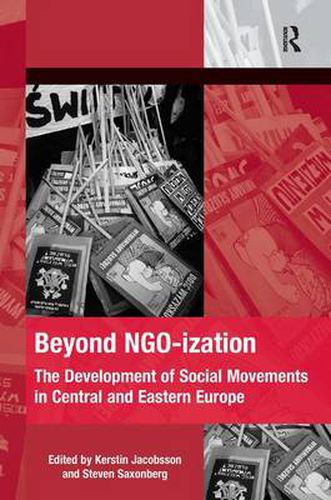
The celebrations marking the 20th anniversary of the fall of the Berlin Wall provoked a debate on the outcomes of the transition process in the post-communist countries, including a debate on the functioning of civil society. This provided a good opportunity for researchers to collect new data and revise the discourse on collective action and the dynamics of civil society in these countries. Jacobsson and Saxonberg’s collection of essays looks at social movements, and their forms of mobilization and organization, as well as action repertoires in relation to the social context, and their success or failure. The book meets an important need in the discourse on post-communist social movements by going beyond the usual discourse about the weak and non-participatory civil society in the post-communist context.
This book gives a nuanced and updated view of social movements in post-communist Europe, by looking at the cases of relatively successful mobilization, by examining groups that have often been neglected in the discourse on social movements and civil society (including animal-rights groups, racist movements and non-feminist family organizations), and by giving a deeper analysis of the different strategies that civil society organizations and groups can use.
Rather than expecting social movements in post-communist Europe to follow the same patterns and operate in the same fashion as in Western Europe, this volume shows that a wider view of contentious action is needed in order to understand the variety of strategies employed by collective actors operating in this context.
$9.00 standard shipping within Australia
FREE standard shipping within Australia for orders over $100.00
Express & International shipping calculated at checkout
Stock availability can be subject to change without notice. We recommend calling the shop or contacting our online team to check availability of low stock items. Please see our Shopping Online page for more details.
The celebrations marking the 20th anniversary of the fall of the Berlin Wall provoked a debate on the outcomes of the transition process in the post-communist countries, including a debate on the functioning of civil society. This provided a good opportunity for researchers to collect new data and revise the discourse on collective action and the dynamics of civil society in these countries. Jacobsson and Saxonberg’s collection of essays looks at social movements, and their forms of mobilization and organization, as well as action repertoires in relation to the social context, and their success or failure. The book meets an important need in the discourse on post-communist social movements by going beyond the usual discourse about the weak and non-participatory civil society in the post-communist context.
This book gives a nuanced and updated view of social movements in post-communist Europe, by looking at the cases of relatively successful mobilization, by examining groups that have often been neglected in the discourse on social movements and civil society (including animal-rights groups, racist movements and non-feminist family organizations), and by giving a deeper analysis of the different strategies that civil society organizations and groups can use.
Rather than expecting social movements in post-communist Europe to follow the same patterns and operate in the same fashion as in Western Europe, this volume shows that a wider view of contentious action is needed in order to understand the variety of strategies employed by collective actors operating in this context.
Search our extensive online catalogue.
