Readings Newsletter
Become a Readings Member to make your shopping experience even easier.
Sign in or sign up for free!
You’re not far away from qualifying for FREE standard shipping within Australia
You’ve qualified for FREE standard shipping within Australia
The cart is loading…


This title is printed to order. This book may have been self-published. If so, we cannot guarantee the quality of the content. In the main most books will have gone through the editing process however some may not. We therefore suggest that you be aware of this before ordering this book. If in doubt check either the author or publisher’s details as we are unable to accept any returns unless they are faulty. Please contact us if you have any questions.
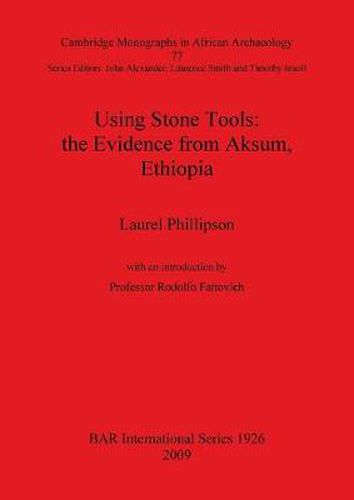
In this book the author presents the results of more than ten years of systematic fieldwork and analysis of the stone tool assemblages in the region of Aksum (Ethiopia). The result is a detailed description and interpretation of the different lithic traditions which were incorporated into the local Pre-Aksumite and Aksumite cultural traditions and represented an important component of the ancient polities in the region, providing a much more complicated picture of the social and economic development of these polities than that so far outlined on the basis of the ceramic and architectural evidence. The study is a very important contribution to the archaeology of Aksum (northern Ethiopia) as well as Ethiopian and African archaeology, as it provides scholars with the first exhaustive analysis and interpretation of the stone tools dating to historical time (1st millennium BC - 1st millennium AD) in the region of Aksum. The book, moreover, is a crucial contribution to the cultural resources management in the archaeological area of Aksum insofar as it provides a complete inventory of all assemblages with stone tools in the region. These assemblages are vanishing very quickly because of the fragility of the archaeological deposits and the urban expansion in thearea. Therefore, the descriptions of the sites and their assessments are most likely the last records of this evidence.
$9.00 standard shipping within Australia
FREE standard shipping within Australia for orders over $100.00
Express & International shipping calculated at checkout
Stock availability can be subject to change without notice. We recommend calling the shop or contacting our online team to check availability of low stock items. Please see our Shopping Online page for more details.
This title is printed to order. This book may have been self-published. If so, we cannot guarantee the quality of the content. In the main most books will have gone through the editing process however some may not. We therefore suggest that you be aware of this before ordering this book. If in doubt check either the author or publisher’s details as we are unable to accept any returns unless they are faulty. Please contact us if you have any questions.
In this book the author presents the results of more than ten years of systematic fieldwork and analysis of the stone tool assemblages in the region of Aksum (Ethiopia). The result is a detailed description and interpretation of the different lithic traditions which were incorporated into the local Pre-Aksumite and Aksumite cultural traditions and represented an important component of the ancient polities in the region, providing a much more complicated picture of the social and economic development of these polities than that so far outlined on the basis of the ceramic and architectural evidence. The study is a very important contribution to the archaeology of Aksum (northern Ethiopia) as well as Ethiopian and African archaeology, as it provides scholars with the first exhaustive analysis and interpretation of the stone tools dating to historical time (1st millennium BC - 1st millennium AD) in the region of Aksum. The book, moreover, is a crucial contribution to the cultural resources management in the archaeological area of Aksum insofar as it provides a complete inventory of all assemblages with stone tools in the region. These assemblages are vanishing very quickly because of the fragility of the archaeological deposits and the urban expansion in thearea. Therefore, the descriptions of the sites and their assessments are most likely the last records of this evidence.
Search our extensive online catalogue.
