Readings Newsletter
Become a Readings Member to make your shopping experience even easier.
Sign in or sign up for free!
You’re not far away from qualifying for FREE standard shipping within Australia
You’ve qualified for FREE standard shipping within Australia
The cart is loading…


This title is printed to order. This book may have been self-published. If so, we cannot guarantee the quality of the content. In the main most books will have gone through the editing process however some may not. We therefore suggest that you be aware of this before ordering this book. If in doubt check either the author or publisher’s details as we are unable to accept any returns unless they are faulty. Please contact us if you have any questions.
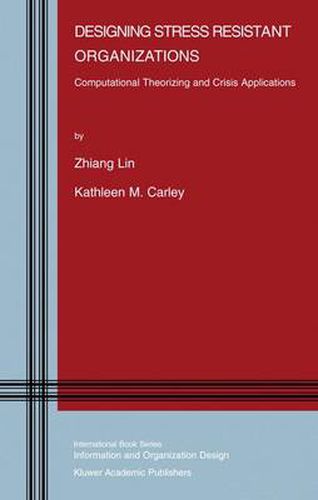
This text demonstrates how computational organization theory can be applied to advance the field of management with its successful integration of theory and practice. At the theoretical level, the book contains a comprehensive computational framework called DYCORP, which simulates dynamic and interactive organizational behaviours by incorporating multiple factors such as organizational design, task environment and stress, and which generates consistent and insightful propositions on organizational performance. The book utilizes an organization science based approach to computational modelling. This approach recognizes the limit of human cognition as it was outlined by Herbert A. Simon in 1947. The model strives to focus on the essence of the reality that is most relevant to the research issue. This approach has been proven to be more beneficial for us to understand the underlying dynamics of the phenomenon. At the empirical level, this book describes an in-depth, though exploratory, analysis of 69 organizational cases in the corporate world collected from multiple sources, which can provide contrast with and shed insight into the computational framework. The book combines both reporting on the research and how to do it that will appeal to a broad range of individuals. We would anticipate that academic researchers and graduate students will find the book useful and they, in turn, will then add to the growing area of computational organizational theory.
$9.00 standard shipping within Australia
FREE standard shipping within Australia for orders over $100.00
Express & International shipping calculated at checkout
Stock availability can be subject to change without notice. We recommend calling the shop or contacting our online team to check availability of low stock items. Please see our Shopping Online page for more details.
This title is printed to order. This book may have been self-published. If so, we cannot guarantee the quality of the content. In the main most books will have gone through the editing process however some may not. We therefore suggest that you be aware of this before ordering this book. If in doubt check either the author or publisher’s details as we are unable to accept any returns unless they are faulty. Please contact us if you have any questions.
This text demonstrates how computational organization theory can be applied to advance the field of management with its successful integration of theory and practice. At the theoretical level, the book contains a comprehensive computational framework called DYCORP, which simulates dynamic and interactive organizational behaviours by incorporating multiple factors such as organizational design, task environment and stress, and which generates consistent and insightful propositions on organizational performance. The book utilizes an organization science based approach to computational modelling. This approach recognizes the limit of human cognition as it was outlined by Herbert A. Simon in 1947. The model strives to focus on the essence of the reality that is most relevant to the research issue. This approach has been proven to be more beneficial for us to understand the underlying dynamics of the phenomenon. At the empirical level, this book describes an in-depth, though exploratory, analysis of 69 organizational cases in the corporate world collected from multiple sources, which can provide contrast with and shed insight into the computational framework. The book combines both reporting on the research and how to do it that will appeal to a broad range of individuals. We would anticipate that academic researchers and graduate students will find the book useful and they, in turn, will then add to the growing area of computational organizational theory.
Search our extensive online catalogue.
