Readings Newsletter
Become a Readings Member to make your shopping experience even easier.
Sign in or sign up for free!
You’re not far away from qualifying for FREE standard shipping within Australia
You’ve qualified for FREE standard shipping within Australia
The cart is loading…


This title is printed to order. This book may have been self-published. If so, we cannot guarantee the quality of the content. In the main most books will have gone through the editing process however some may not. We therefore suggest that you be aware of this before ordering this book. If in doubt check either the author or publisher’s details as we are unable to accept any returns unless they are faulty. Please contact us if you have any questions.
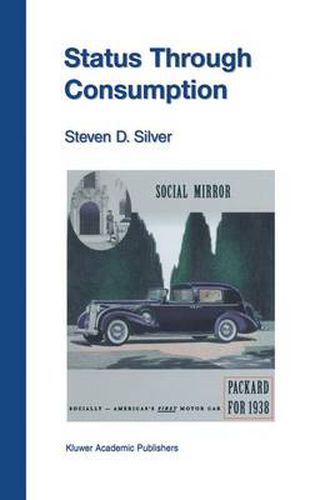
Consumption takes place in settings or environments which have both direct and indirect effects on its dynamic path. Direct effects of environments on activities in consuming can occur through constraints that environments impose. Environment can also have indirect effects on consumption through enduring modification of internalized constructs which enter heuristics for decisions on activities. The importance of environments to consumption is increased by the definitional dependence of status on the judgements of others. This study examines microprocessing in consumer activities for status as it interacts with structure in the environments of these activities. The importance of environments in status activities provides the basis for a seperate, but related inquiry into observed differences in the form they take across societies. Conjecture on the consequences of differences in the structure of environments for consumption that typify a society is studied in the narrative statements by members of comparison societies and in the content of print advertising in these societies. Evolutionary processes which could establish observed differences in structure across societies are also considered in both their systematic and random components.
$9.00 standard shipping within Australia
FREE standard shipping within Australia for orders over $100.00
Express & International shipping calculated at checkout
Stock availability can be subject to change without notice. We recommend calling the shop or contacting our online team to check availability of low stock items. Please see our Shopping Online page for more details.
This title is printed to order. This book may have been self-published. If so, we cannot guarantee the quality of the content. In the main most books will have gone through the editing process however some may not. We therefore suggest that you be aware of this before ordering this book. If in doubt check either the author or publisher’s details as we are unable to accept any returns unless they are faulty. Please contact us if you have any questions.
Consumption takes place in settings or environments which have both direct and indirect effects on its dynamic path. Direct effects of environments on activities in consuming can occur through constraints that environments impose. Environment can also have indirect effects on consumption through enduring modification of internalized constructs which enter heuristics for decisions on activities. The importance of environments to consumption is increased by the definitional dependence of status on the judgements of others. This study examines microprocessing in consumer activities for status as it interacts with structure in the environments of these activities. The importance of environments in status activities provides the basis for a seperate, but related inquiry into observed differences in the form they take across societies. Conjecture on the consequences of differences in the structure of environments for consumption that typify a society is studied in the narrative statements by members of comparison societies and in the content of print advertising in these societies. Evolutionary processes which could establish observed differences in structure across societies are also considered in both their systematic and random components.
Search our extensive online catalogue.
