Readings Newsletter
Become a Readings Member to make your shopping experience even easier.
Sign in or sign up for free!
You’re not far away from qualifying for FREE standard shipping within Australia
You’ve qualified for FREE standard shipping within Australia
The cart is loading…


This title is printed to order. This book may have been self-published. If so, we cannot guarantee the quality of the content. In the main most books will have gone through the editing process however some may not. We therefore suggest that you be aware of this before ordering this book. If in doubt check either the author or publisher’s details as we are unable to accept any returns unless they are faulty. Please contact us if you have any questions.
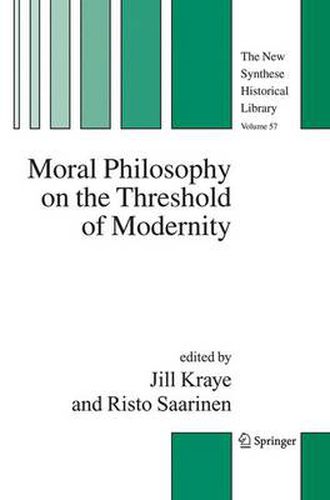
Over the past twenty years the transition from the late Middle Ages to the early modern era has received increasing attention from experts in the history of philosophy. In part, this new interest arises from claims, made in literature aimed at a less specialist readership, that this transition was responsible for the subsequent philosophical and theological problems of the Enlightenment. Philosophers like Alasdair MacIntyre and theologians like John Milbank display a certain nostalgia for the medieval synthesis of Thomas Aquinas and, consequently, evaluate the period from 1300 to 1700 in rather negative terms. Other historians of philosophy writing for the general public, such as Charles Taylor, take a more positive view of the Reformation but nevertheless conclude that modernity has been shaped by 1 conflicts which stem from early modern times. Ethics and moral thought occupy a central place in these theories. It is assumed that we have lost something - the concept of virtue, for instance, or the source of common morality. Yet those who put forward such notions do not treat the history of ethics in detail. From the historian’s perspective, their far-reaching theoretical assumptions are based on a quite small body of textual evidence. In reality, there was a rich variety of approaches to moral thinking and ethical theories during the period from 1400 to 1600.
$9.00 standard shipping within Australia
FREE standard shipping within Australia for orders over $100.00
Express & International shipping calculated at checkout
Stock availability can be subject to change without notice. We recommend calling the shop or contacting our online team to check availability of low stock items. Please see our Shopping Online page for more details.
This title is printed to order. This book may have been self-published. If so, we cannot guarantee the quality of the content. In the main most books will have gone through the editing process however some may not. We therefore suggest that you be aware of this before ordering this book. If in doubt check either the author or publisher’s details as we are unable to accept any returns unless they are faulty. Please contact us if you have any questions.
Over the past twenty years the transition from the late Middle Ages to the early modern era has received increasing attention from experts in the history of philosophy. In part, this new interest arises from claims, made in literature aimed at a less specialist readership, that this transition was responsible for the subsequent philosophical and theological problems of the Enlightenment. Philosophers like Alasdair MacIntyre and theologians like John Milbank display a certain nostalgia for the medieval synthesis of Thomas Aquinas and, consequently, evaluate the period from 1300 to 1700 in rather negative terms. Other historians of philosophy writing for the general public, such as Charles Taylor, take a more positive view of the Reformation but nevertheless conclude that modernity has been shaped by 1 conflicts which stem from early modern times. Ethics and moral thought occupy a central place in these theories. It is assumed that we have lost something - the concept of virtue, for instance, or the source of common morality. Yet those who put forward such notions do not treat the history of ethics in detail. From the historian’s perspective, their far-reaching theoretical assumptions are based on a quite small body of textual evidence. In reality, there was a rich variety of approaches to moral thinking and ethical theories during the period from 1400 to 1600.
Search our extensive online catalogue.
