Readings Newsletter
Become a Readings Member to make your shopping experience even easier.
Sign in or sign up for free!
You’re not far away from qualifying for FREE standard shipping within Australia
You’ve qualified for FREE standard shipping within Australia
The cart is loading…


This title is printed to order. This book may have been self-published. If so, we cannot guarantee the quality of the content. In the main most books will have gone through the editing process however some may not. We therefore suggest that you be aware of this before ordering this book. If in doubt check either the author or publisher’s details as we are unable to accept any returns unless they are faulty. Please contact us if you have any questions.
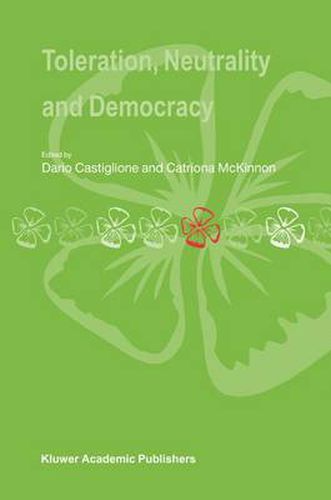
Tolerance is widely regarded as a virtue - of both individuals and groups - that modern democratic and multicultural societies cannot do without. The historical emergence and growth of religious toleration is often seen as an important precondition for the development of political and legal institutions that aim to respect different ideas of the good in society. But the exact nature, limits and forms of expression of toleration are not beyond contestation. The very formulation of the ideal of tolerance is said to give rise to a moral paradox: why tolerate ideas, behaviour and practices that one believes to be wrong? The first part of this collection of essays traces the passage of toleration from a moral to a political virtue, which may contribute to avoiding such a paradox. Political toleration asks not that people accept the reasons or actions of others, to whom they may strongly object, but rather that they reassess and revise their own reasons for opposition and repression in the light of public reason. Such a shift to the political perspective brings, however, new theoretical and institutional problems relating in particular to the nature of political neutrality and the working of democratic institutions. The second and third parts of the volume attempt to clarify the terms of the debate on political toleration. The book brings together a group of international scholars, many of whom have already contributed to the debate on toleration, and who are offering fresh thoughts and approaches to it. The essays of this collection are written from a variety of perspectives: historical, analytical, normative, and legal. Yet, all authors share a concern with the sharpening of our understanding of the reasons for toleration as well as with making them relevant to the way in which we live with others in our modern and diverse societies.
$9.00 standard shipping within Australia
FREE standard shipping within Australia for orders over $100.00
Express & International shipping calculated at checkout
Stock availability can be subject to change without notice. We recommend calling the shop or contacting our online team to check availability of low stock items. Please see our Shopping Online page for more details.
This title is printed to order. This book may have been self-published. If so, we cannot guarantee the quality of the content. In the main most books will have gone through the editing process however some may not. We therefore suggest that you be aware of this before ordering this book. If in doubt check either the author or publisher’s details as we are unable to accept any returns unless they are faulty. Please contact us if you have any questions.
Tolerance is widely regarded as a virtue - of both individuals and groups - that modern democratic and multicultural societies cannot do without. The historical emergence and growth of religious toleration is often seen as an important precondition for the development of political and legal institutions that aim to respect different ideas of the good in society. But the exact nature, limits and forms of expression of toleration are not beyond contestation. The very formulation of the ideal of tolerance is said to give rise to a moral paradox: why tolerate ideas, behaviour and practices that one believes to be wrong? The first part of this collection of essays traces the passage of toleration from a moral to a political virtue, which may contribute to avoiding such a paradox. Political toleration asks not that people accept the reasons or actions of others, to whom they may strongly object, but rather that they reassess and revise their own reasons for opposition and repression in the light of public reason. Such a shift to the political perspective brings, however, new theoretical and institutional problems relating in particular to the nature of political neutrality and the working of democratic institutions. The second and third parts of the volume attempt to clarify the terms of the debate on political toleration. The book brings together a group of international scholars, many of whom have already contributed to the debate on toleration, and who are offering fresh thoughts and approaches to it. The essays of this collection are written from a variety of perspectives: historical, analytical, normative, and legal. Yet, all authors share a concern with the sharpening of our understanding of the reasons for toleration as well as with making them relevant to the way in which we live with others in our modern and diverse societies.
Search our extensive online catalogue.
