Readings Newsletter
Become a Readings Member to make your shopping experience even easier.
Sign in or sign up for free!
You’re not far away from qualifying for FREE standard shipping within Australia
You’ve qualified for FREE standard shipping within Australia
The cart is loading…


Gain a competitive edge in the semiconductor industry with this essential guide, which provides the practical insights and machine learning techniques needed to optimize the fabrication of hybrid nanodevices for integrated circuits.
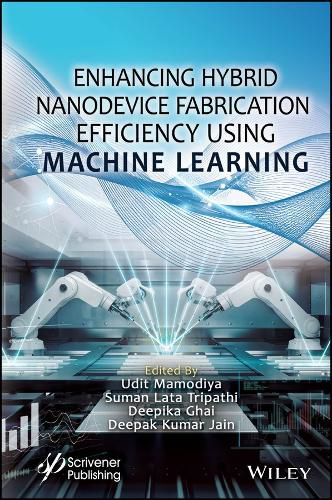
Enhancing Hybrid Nanodevice Fabrication Efficiency Using Machine Learning explores the intersection of advanced manufacturing techniques and machine learning applications in the field of nanotechnology, specifically focusing on hybrid nanodevices for integrated circuits. This book provides a comprehensive understanding of how machine learning algorithms and techniques can optimize the fabrication processes of hybrid nanodevices, improving their efficiency, reliability, and performance in integrated circuit applications. The book begins with an introduction to the fundamentals of hybrid nanodevice fabrication and the role of machine learning in enhancing these processes. It then delves into various machine learning algorithms and models used for process optimization, quality control, and predictive maintenance in integrated circuit fabrication. Case studies and practical examples illustrate real-world applications of machine learning in improving yield, reducing costs, and accelerating time-to-market for hybrid nanodevices. It also addresses the pressing need for a comprehensive guide on machine learning applications in nanodevice fabrication. It provides researchers, engineers, and industry professionals with practical insights for implementing machine learning techniques to tackle challenges such as variability reduction, defect detection, and process optimization. By bridging the gap between theory and practice, the book equips readers with the knowledge and tools necessary to leverage machine learning for a competitive advantage in the semiconductor industry.
$9.00 standard shipping within Australia
FREE standard shipping within Australia for orders over $100.00
Express & International shipping calculated at checkout
Stock availability can be subject to change without notice. We recommend calling the shop or contacting our online team to check availability of low stock items. Please see our Shopping Online page for more details.
Gain a competitive edge in the semiconductor industry with this essential guide, which provides the practical insights and machine learning techniques needed to optimize the fabrication of hybrid nanodevices for integrated circuits.
Enhancing Hybrid Nanodevice Fabrication Efficiency Using Machine Learning explores the intersection of advanced manufacturing techniques and machine learning applications in the field of nanotechnology, specifically focusing on hybrid nanodevices for integrated circuits. This book provides a comprehensive understanding of how machine learning algorithms and techniques can optimize the fabrication processes of hybrid nanodevices, improving their efficiency, reliability, and performance in integrated circuit applications. The book begins with an introduction to the fundamentals of hybrid nanodevice fabrication and the role of machine learning in enhancing these processes. It then delves into various machine learning algorithms and models used for process optimization, quality control, and predictive maintenance in integrated circuit fabrication. Case studies and practical examples illustrate real-world applications of machine learning in improving yield, reducing costs, and accelerating time-to-market for hybrid nanodevices. It also addresses the pressing need for a comprehensive guide on machine learning applications in nanodevice fabrication. It provides researchers, engineers, and industry professionals with practical insights for implementing machine learning techniques to tackle challenges such as variability reduction, defect detection, and process optimization. By bridging the gap between theory and practice, the book equips readers with the knowledge and tools necessary to leverage machine learning for a competitive advantage in the semiconductor industry.
Search our extensive online catalogue.
