Readings Newsletter
Become a Readings Member to make your shopping experience even easier.
Sign in or sign up for free!
You’re not far away from qualifying for FREE standard shipping within Australia
You’ve qualified for FREE standard shipping within Australia
The cart is loading…


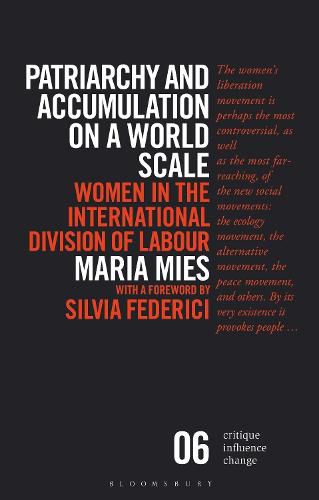
‘It is my thesis that this general production of life, or subsistence production - mainly performed through the non-wage labour of women and other non-wage labourers as slaves, contract workers and peasants in the colonies - constitutes the perennial basis upon which capitalist productive labour can be built up and exploited.’
First published in 1986, Maria Mies’s progressive book was hailed as a major paradigm shift for feminist theory, and it remains a major contribution to development theory and practice today.
Tracing the social origins of the sexual division of labour, it offers a history of the related processes of colonization and ‘housewifization’ and extends this analysis to the contemporary new international division of labour. Mies’s theory of capitalist patriarchy has become even more relevant today.
This new edition includes a substantial new introduction in which she both applies her theory to the new globalized world and answers her critics.
$9.00 standard shipping within Australia
FREE standard shipping within Australia for orders over $100.00
Express & International shipping calculated at checkout
Stock availability can be subject to change without notice. We recommend calling the shop or contacting our online team to check availability of low stock items. Please see our Shopping Online page for more details.
‘It is my thesis that this general production of life, or subsistence production - mainly performed through the non-wage labour of women and other non-wage labourers as slaves, contract workers and peasants in the colonies - constitutes the perennial basis upon which capitalist productive labour can be built up and exploited.’
First published in 1986, Maria Mies’s progressive book was hailed as a major paradigm shift for feminist theory, and it remains a major contribution to development theory and practice today.
Tracing the social origins of the sexual division of labour, it offers a history of the related processes of colonization and ‘housewifization’ and extends this analysis to the contemporary new international division of labour. Mies’s theory of capitalist patriarchy has become even more relevant today.
This new edition includes a substantial new introduction in which she both applies her theory to the new globalized world and answers her critics.
Search our extensive online catalogue.
