Readings Newsletter
Become a Readings Member to make your shopping experience even easier.
Sign in or sign up for free!
You’re not far away from qualifying for FREE standard shipping within Australia
You’ve qualified for FREE standard shipping within Australia
The cart is loading…


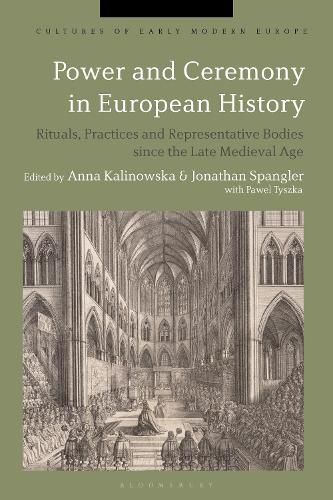
From oaths and hand-kissing to coronations and baptisms, Power and Ceremony in European History considers the governing practices, courtly rituals, and expressions of power prevalent in Europe and the Ottoman Empire from the medieval age to the modern era.
Bringing together political and art historical approaches to the study of power, this book reveals how ceremonies and rituals - far from simply being ostentatious displays of wealth - served as a primary means of communication between different participants in political and courtly life. It explores how ceremonial culture changed over time and in different regions to provide readers with a nuanced comparative understanding of rituals and ceremonies since the middle ages, showing how such performances were integral to the evolution of the state in Europe.
This collection of essays is of immense value to both historians and art historians interested in representations of power and the political culture of Europe from 1450 onwards.
$9.00 standard shipping within Australia
FREE standard shipping within Australia for orders over $100.00
Express & International shipping calculated at checkout
Stock availability can be subject to change without notice. We recommend calling the shop or contacting our online team to check availability of low stock items. Please see our Shopping Online page for more details.
From oaths and hand-kissing to coronations and baptisms, Power and Ceremony in European History considers the governing practices, courtly rituals, and expressions of power prevalent in Europe and the Ottoman Empire from the medieval age to the modern era.
Bringing together political and art historical approaches to the study of power, this book reveals how ceremonies and rituals - far from simply being ostentatious displays of wealth - served as a primary means of communication between different participants in political and courtly life. It explores how ceremonial culture changed over time and in different regions to provide readers with a nuanced comparative understanding of rituals and ceremonies since the middle ages, showing how such performances were integral to the evolution of the state in Europe.
This collection of essays is of immense value to both historians and art historians interested in representations of power and the political culture of Europe from 1450 onwards.
Search our extensive online catalogue.
