Readings Newsletter
Become a Readings Member to make your shopping experience even easier.
Sign in or sign up for free!
You’re not far away from qualifying for FREE standard shipping within Australia
You’ve qualified for FREE standard shipping within Australia
The cart is loading…


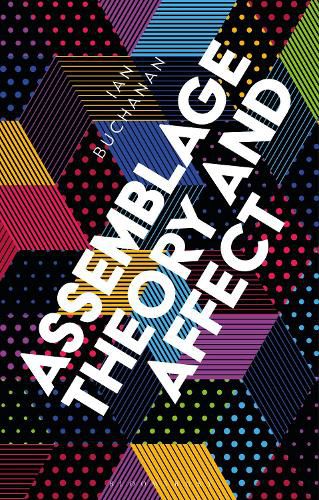
In Assemblage Theory and Affect, Ian Buchanan continues the project he began in Assemblage Theory and Method, of demystifying the critical elements of the work of Deleuze and Guattari.
He argues that the concepts of assemblage and affect, which were separated at birth, need to be reunited if we are to fully understand what Deleuze and Guattari meant by these pivotal concepts. To this end, Assemblage Theory and Affect proposes three agenda-setting arguments that will change how we see the concepts of the assemblage and affect.
Affect is a function of desire - its powers are the powers we attribute to desire. As such, like desire it should be considered a psychical agency. The assemblage, the body without organs and the abstract machine are all components of this psychical agency.
Affect is a capacitating power - it empowers us to meet life. Affect is not the measure of our response to a given stimulus, it is rather the capacity we have to respond to a stimulus in the way that we do. This is the essential argument of Deleuze and Guattari's schizoanalytic project which is a kind of survivor's guide to late capitalism.
The capacitating power of affect depends upon the combinations of bodies without organs and abstract machines that we have been able to put together by means of the assemblages available to us. This is what Deleuze means by an ethics of desire.
Buchanan outlines the meaning of both concepts for contemporary philosophy, art, cultural and critical theory and politics. In applying these theories to real life practices and experiences, these concepts are given clarity and force.
$9.00 standard shipping within Australia
FREE standard shipping within Australia for orders over $100.00
Express & International shipping calculated at checkout
Stock availability can be subject to change without notice. We recommend calling the shop or contacting our online team to check availability of low stock items. Please see our Shopping Online page for more details.
In Assemblage Theory and Affect, Ian Buchanan continues the project he began in Assemblage Theory and Method, of demystifying the critical elements of the work of Deleuze and Guattari.
He argues that the concepts of assemblage and affect, which were separated at birth, need to be reunited if we are to fully understand what Deleuze and Guattari meant by these pivotal concepts. To this end, Assemblage Theory and Affect proposes three agenda-setting arguments that will change how we see the concepts of the assemblage and affect.
Affect is a function of desire - its powers are the powers we attribute to desire. As such, like desire it should be considered a psychical agency. The assemblage, the body without organs and the abstract machine are all components of this psychical agency.
Affect is a capacitating power - it empowers us to meet life. Affect is not the measure of our response to a given stimulus, it is rather the capacity we have to respond to a stimulus in the way that we do. This is the essential argument of Deleuze and Guattari's schizoanalytic project which is a kind of survivor's guide to late capitalism.
The capacitating power of affect depends upon the combinations of bodies without organs and abstract machines that we have been able to put together by means of the assemblages available to us. This is what Deleuze means by an ethics of desire.
Buchanan outlines the meaning of both concepts for contemporary philosophy, art, cultural and critical theory and politics. In applying these theories to real life practices and experiences, these concepts are given clarity and force.
Search our extensive online catalogue.
