Readings Newsletter
Become a Readings Member to make your shopping experience even easier.
Sign in or sign up for free!
You’re not far away from qualifying for FREE standard shipping within Australia
You’ve qualified for FREE standard shipping within Australia
The cart is loading…


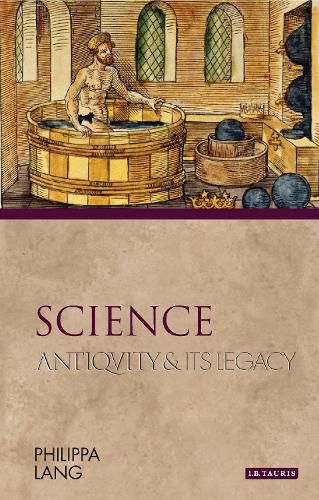
Ancient science is a subject that commands extensive general interest. This is the first non-technical survey of the interface between ancient and modern science. It is aimed at crossover student sales in classics, the history of ideas and the history and philosophy of science. Modern science and its technology are the children of the seventeenth-century. But the bold investigative experimentation and scientific systems of thought that this era spawned were in turn thoroughly influenced by Greek and Roman authors and ideas. Xenophanes’ ideas about fossils informed the science of geology. Copernicus and his novel notion that the earth revolved around the sun, and not vice versa, were arguably influenced by the Samian philosopher and mathematician, Aristarchus. And the anatomists of Alexandria still - even today - have valuable insights to bring to current ethical discussions of vivisection and animal welfare. Shedding fresh light on topics such as Euclid’s geometry, Aristotelian physics and the proto-Darwinism of pre-Socratic thinkers like Empedocles, Philippa Lang addresses the fascinating differences and similarities between ancient and modern conceptions of ‘science’.She discusses the origins of the cosmos; natural laws in mathematics and physics; conceptions and philosophies of biology and disease; ideas about mechanistic science and technology as they have been used to control the societies of human beings; and the important nexus between science, morality and ethics. Greek and Roman parallels illuminate and clarify the meaning of science itself.
$9.00 standard shipping within Australia
FREE standard shipping within Australia for orders over $100.00
Express & International shipping calculated at checkout
Stock availability can be subject to change without notice. We recommend calling the shop or contacting our online team to check availability of low stock items. Please see our Shopping Online page for more details.
Ancient science is a subject that commands extensive general interest. This is the first non-technical survey of the interface between ancient and modern science. It is aimed at crossover student sales in classics, the history of ideas and the history and philosophy of science. Modern science and its technology are the children of the seventeenth-century. But the bold investigative experimentation and scientific systems of thought that this era spawned were in turn thoroughly influenced by Greek and Roman authors and ideas. Xenophanes’ ideas about fossils informed the science of geology. Copernicus and his novel notion that the earth revolved around the sun, and not vice versa, were arguably influenced by the Samian philosopher and mathematician, Aristarchus. And the anatomists of Alexandria still - even today - have valuable insights to bring to current ethical discussions of vivisection and animal welfare. Shedding fresh light on topics such as Euclid’s geometry, Aristotelian physics and the proto-Darwinism of pre-Socratic thinkers like Empedocles, Philippa Lang addresses the fascinating differences and similarities between ancient and modern conceptions of ‘science’.She discusses the origins of the cosmos; natural laws in mathematics and physics; conceptions and philosophies of biology and disease; ideas about mechanistic science and technology as they have been used to control the societies of human beings; and the important nexus between science, morality and ethics. Greek and Roman parallels illuminate and clarify the meaning of science itself.
Search our extensive online catalogue.
