Readings Newsletter
Become a Readings Member to make your shopping experience even easier.
Sign in or sign up for free!
You’re not far away from qualifying for FREE standard shipping within Australia
You’ve qualified for FREE standard shipping within Australia
The cart is loading…


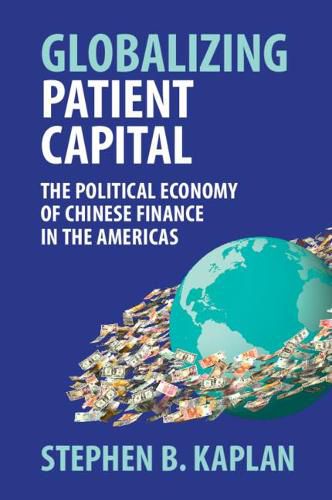
China’s overseas financing is a distinct form of patient capital that marshals the country’s vast domestic resources to create commercial opportunities internationally. Its long-term risk tolerance and lack of policy conditionality has allowed developing economies to sidestep the fiscal austerity tendencies of Western markets and multilaterals. Employing statistical tests and extensive field research across China and Latin America, Stephen Kaplan finds that China’s patient capital endows national governments with more room to maneuver in formulating domestic policies. The author goes on to evaluate the potential costs of Chinese financing, raising the question of how Chinese lenders will react to developing nation’s ongoing struggles with debt and dependency. By disaggregating the structure of international finance, Globalizing Patient Capital has significant implications for the rise of China in Latin America, offering new insights about globalization and showing the costs and benefits of state versus market approaches to development.
$9.00 standard shipping within Australia
FREE standard shipping within Australia for orders over $100.00
Express & International shipping calculated at checkout
Stock availability can be subject to change without notice. We recommend calling the shop or contacting our online team to check availability of low stock items. Please see our Shopping Online page for more details.
China’s overseas financing is a distinct form of patient capital that marshals the country’s vast domestic resources to create commercial opportunities internationally. Its long-term risk tolerance and lack of policy conditionality has allowed developing economies to sidestep the fiscal austerity tendencies of Western markets and multilaterals. Employing statistical tests and extensive field research across China and Latin America, Stephen Kaplan finds that China’s patient capital endows national governments with more room to maneuver in formulating domestic policies. The author goes on to evaluate the potential costs of Chinese financing, raising the question of how Chinese lenders will react to developing nation’s ongoing struggles with debt and dependency. By disaggregating the structure of international finance, Globalizing Patient Capital has significant implications for the rise of China in Latin America, offering new insights about globalization and showing the costs and benefits of state versus market approaches to development.
Search our extensive online catalogue.
