Readings Newsletter
Become a Readings Member to make your shopping experience even easier.
Sign in or sign up for free!
You’re not far away from qualifying for FREE standard shipping within Australia
You’ve qualified for FREE standard shipping within Australia
The cart is loading…


This title is printed to order. This book may have been self-published. If so, we cannot guarantee the quality of the content. In the main most books will have gone through the editing process however some may not. We therefore suggest that you be aware of this before ordering this book. If in doubt check either the author or publisher’s details as we are unable to accept any returns unless they are faulty. Please contact us if you have any questions.
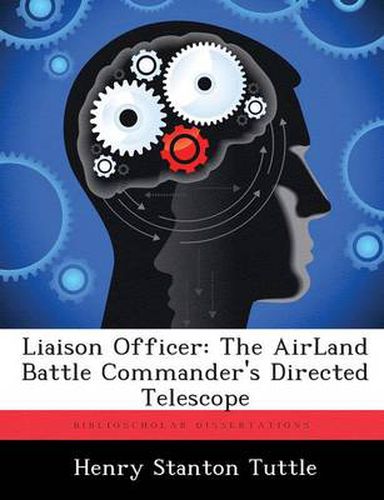
This monograph asks the question, How can the command and control system best support the AirLand Battle commander, i.e., what mix of technology and people is appropriate? By tracing the historical evidence of liaison and liaison officers, and some of the current and proposed technological command and control aids, the study presents examples of how a commander has been successfully supported by his command and control system, and what some of the problems have been with both human and technological command and control aids. This monograph proposes a solution to the continuing problem facing commanders - how to have a clear picture of the battlefield and simultaneously transmit his intent to his subordinates. Liaison officers equipped with high technology equipment can serve the commander as a directed telescope system on the AirLand Battlefield. This monograph concludes that the best commanders have been the ones who made the command and control system work for them, and did not become slaves to the system. The study also concludes that its proposed solution - liaison officers equipped with high technology equipment - can improve the command and control system. By doing so, the commander can make his will and intent both informed and clearly transmitted.
$9.00 standard shipping within Australia
FREE standard shipping within Australia for orders over $100.00
Express & International shipping calculated at checkout
Stock availability can be subject to change without notice. We recommend calling the shop or contacting our online team to check availability of low stock items. Please see our Shopping Online page for more details.
This title is printed to order. This book may have been self-published. If so, we cannot guarantee the quality of the content. In the main most books will have gone through the editing process however some may not. We therefore suggest that you be aware of this before ordering this book. If in doubt check either the author or publisher’s details as we are unable to accept any returns unless they are faulty. Please contact us if you have any questions.
This monograph asks the question, How can the command and control system best support the AirLand Battle commander, i.e., what mix of technology and people is appropriate? By tracing the historical evidence of liaison and liaison officers, and some of the current and proposed technological command and control aids, the study presents examples of how a commander has been successfully supported by his command and control system, and what some of the problems have been with both human and technological command and control aids. This monograph proposes a solution to the continuing problem facing commanders - how to have a clear picture of the battlefield and simultaneously transmit his intent to his subordinates. Liaison officers equipped with high technology equipment can serve the commander as a directed telescope system on the AirLand Battlefield. This monograph concludes that the best commanders have been the ones who made the command and control system work for them, and did not become slaves to the system. The study also concludes that its proposed solution - liaison officers equipped with high technology equipment - can improve the command and control system. By doing so, the commander can make his will and intent both informed and clearly transmitted.
Search our extensive online catalogue.
