Readings Newsletter
Become a Readings Member to make your shopping experience even easier.
Sign in or sign up for free!
You’re not far away from qualifying for FREE standard shipping within Australia
You’ve qualified for FREE standard shipping within Australia
The cart is loading…


This title is printed to order. This book may have been self-published. If so, we cannot guarantee the quality of the content. In the main most books will have gone through the editing process however some may not. We therefore suggest that you be aware of this before ordering this book. If in doubt check either the author or publisher’s details as we are unable to accept any returns unless they are faulty. Please contact us if you have any questions.
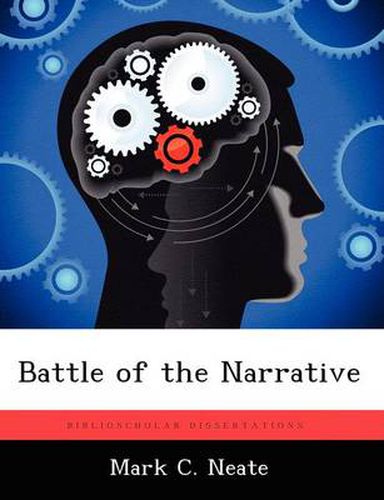
On March 20, 2003, a United States led coalition invaded Iraq. The character of this conflict can be defined by the West’s ability to conduct precision strikes, to manoeuvre and to overwhelm the enemy’s command system. Emerging U.K. and U.S. military doctrine posits that conflicts of the future are likely to be defined equally, if not more, by the centrality of influence. Adversaries have recognised the strategic benefits of influencing perceptions and will continue to exploit information and communications technology advances to this end. In a competition of contesting narratives, information will flash around the world in near real time, challenging the abilities of governments and established news networks to react in a timely fashion. Near global transparency increases the risk of inconsequential military incidents being turned into strategic events with adverse connotations. To win the battle of the narratives, the U.K.‘s security apparatus must be able to wield influence at all levels, across multiple media, within joint, multinational and interagency environments at a much higher tempo than present.
$9.00 standard shipping within Australia
FREE standard shipping within Australia for orders over $100.00
Express & International shipping calculated at checkout
Stock availability can be subject to change without notice. We recommend calling the shop or contacting our online team to check availability of low stock items. Please see our Shopping Online page for more details.
This title is printed to order. This book may have been self-published. If so, we cannot guarantee the quality of the content. In the main most books will have gone through the editing process however some may not. We therefore suggest that you be aware of this before ordering this book. If in doubt check either the author or publisher’s details as we are unable to accept any returns unless they are faulty. Please contact us if you have any questions.
On March 20, 2003, a United States led coalition invaded Iraq. The character of this conflict can be defined by the West’s ability to conduct precision strikes, to manoeuvre and to overwhelm the enemy’s command system. Emerging U.K. and U.S. military doctrine posits that conflicts of the future are likely to be defined equally, if not more, by the centrality of influence. Adversaries have recognised the strategic benefits of influencing perceptions and will continue to exploit information and communications technology advances to this end. In a competition of contesting narratives, information will flash around the world in near real time, challenging the abilities of governments and established news networks to react in a timely fashion. Near global transparency increases the risk of inconsequential military incidents being turned into strategic events with adverse connotations. To win the battle of the narratives, the U.K.‘s security apparatus must be able to wield influence at all levels, across multiple media, within joint, multinational and interagency environments at a much higher tempo than present.
Search our extensive online catalogue.
