Readings Newsletter
Become a Readings Member to make your shopping experience even easier.
Sign in or sign up for free!
You’re not far away from qualifying for FREE standard shipping within Australia
You’ve qualified for FREE standard shipping within Australia
The cart is loading…


This title is printed to order. This book may have been self-published. If so, we cannot guarantee the quality of the content. In the main most books will have gone through the editing process however some may not. We therefore suggest that you be aware of this before ordering this book. If in doubt check either the author or publisher’s details as we are unable to accept any returns unless they are faulty. Please contact us if you have any questions.
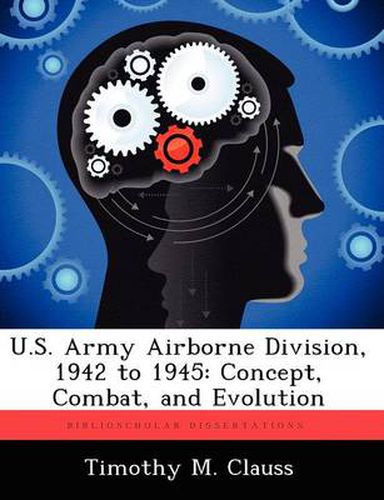
In 1939, the U.S. Army had no formal combat formation capable of reaching the battlefield by air. In response to the success of German airborne operations, the U.S. Army formed a small unit of volunteers which was to experiment with airborne equipment and develop techniques. In the span of six years, the fledgling airborne concept expanded from a small platoon of parachute volunteers into five deployed airborne divisions composed of parachute and glider forces with a formal doctrine. This thesis examines the development of the airborne division through its employment in the Mediterranean and European Theaters of Operation, as these theaters employed four of the five U.S. airborne divisions during World War II. The doctrine, organization, and equipment of the airborne division changed significantly from its inception through the end of WWII. Personal influence, lessons learned from combat, and logistical limitations significantly affected the evolution of the airborne division.
$9.00 standard shipping within Australia
FREE standard shipping within Australia for orders over $100.00
Express & International shipping calculated at checkout
Stock availability can be subject to change without notice. We recommend calling the shop or contacting our online team to check availability of low stock items. Please see our Shopping Online page for more details.
This title is printed to order. This book may have been self-published. If so, we cannot guarantee the quality of the content. In the main most books will have gone through the editing process however some may not. We therefore suggest that you be aware of this before ordering this book. If in doubt check either the author or publisher’s details as we are unable to accept any returns unless they are faulty. Please contact us if you have any questions.
In 1939, the U.S. Army had no formal combat formation capable of reaching the battlefield by air. In response to the success of German airborne operations, the U.S. Army formed a small unit of volunteers which was to experiment with airborne equipment and develop techniques. In the span of six years, the fledgling airborne concept expanded from a small platoon of parachute volunteers into five deployed airborne divisions composed of parachute and glider forces with a formal doctrine. This thesis examines the development of the airborne division through its employment in the Mediterranean and European Theaters of Operation, as these theaters employed four of the five U.S. airborne divisions during World War II. The doctrine, organization, and equipment of the airborne division changed significantly from its inception through the end of WWII. Personal influence, lessons learned from combat, and logistical limitations significantly affected the evolution of the airborne division.
Search our extensive online catalogue.
