Readings Newsletter
Become a Readings Member to make your shopping experience even easier.
Sign in or sign up for free!
You’re not far away from qualifying for FREE standard shipping within Australia
You’ve qualified for FREE standard shipping within Australia
The cart is loading…


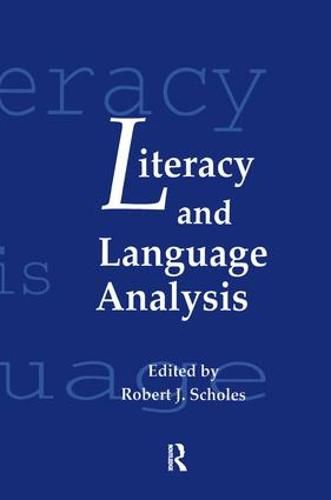
This volume investigates the interconnections between language and literacy in terms of the structures of language as well as the linguistic contexts of literacy. The work for this book was generated in order to focus on studies of the acquisition and impact of literacy on traditional assertions of linguistic analysts. The contributors show that claims regarding descriptions of the linguistic competence of native speakers contain phonemic, morphemic, and sentential constructs applicable only to literate language users. They also suggest that syntactic formalities – elements lacking extensional reference – are unlikely in the absence of literacy, and that the notions of sentencehood and syntactic well-formedness are functions of literacy. Finally, the book reviews the basic notions of literary relativity and the role of literacy in communication and civilization.
$9.00 standard shipping within Australia
FREE standard shipping within Australia for orders over $100.00
Express & International shipping calculated at checkout
Stock availability can be subject to change without notice. We recommend calling the shop or contacting our online team to check availability of low stock items. Please see our Shopping Online page for more details.
This volume investigates the interconnections between language and literacy in terms of the structures of language as well as the linguistic contexts of literacy. The work for this book was generated in order to focus on studies of the acquisition and impact of literacy on traditional assertions of linguistic analysts. The contributors show that claims regarding descriptions of the linguistic competence of native speakers contain phonemic, morphemic, and sentential constructs applicable only to literate language users. They also suggest that syntactic formalities – elements lacking extensional reference – are unlikely in the absence of literacy, and that the notions of sentencehood and syntactic well-formedness are functions of literacy. Finally, the book reviews the basic notions of literary relativity and the role of literacy in communication and civilization.
Search our extensive online catalogue.
