Readings Newsletter
Become a Readings Member to make your shopping experience even easier.
Sign in or sign up for free!
You’re not far away from qualifying for FREE standard shipping within Australia
You’ve qualified for FREE standard shipping within Australia
The cart is loading…


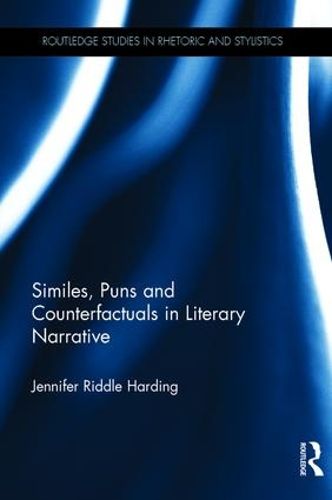
In this study, Jennifer Riddle Harding presents a cognitive analysis of three figures of speech that have readily identifiable forms: similes, puns, and counterfactuals. Harding argues that when deployed in literary narrative, these forms have narrative functions-such as the depiction of conscious experiences, allegorical meanings, and alternative plots-uniquely developed by these more visible figures of speech. Metaphors, by contrast, are often invisible in the formal structure of a text. With a solid cognitive grounding, Harding’s approach emphasizes the relationship between figurative forms and narrative effects. Harding demonstrates the literary functions of previously neglected figures of speech, and the potential for a unified approach to a topic that crosses cognitive disciplines. Her work has implications for the rhetorical approach to figures of speech, for cognitive disciplines, and for the studies of literature, rhetoric, and narrative.
$9.00 standard shipping within Australia
FREE standard shipping within Australia for orders over $100.00
Express & International shipping calculated at checkout
Stock availability can be subject to change without notice. We recommend calling the shop or contacting our online team to check availability of low stock items. Please see our Shopping Online page for more details.
In this study, Jennifer Riddle Harding presents a cognitive analysis of three figures of speech that have readily identifiable forms: similes, puns, and counterfactuals. Harding argues that when deployed in literary narrative, these forms have narrative functions-such as the depiction of conscious experiences, allegorical meanings, and alternative plots-uniquely developed by these more visible figures of speech. Metaphors, by contrast, are often invisible in the formal structure of a text. With a solid cognitive grounding, Harding’s approach emphasizes the relationship between figurative forms and narrative effects. Harding demonstrates the literary functions of previously neglected figures of speech, and the potential for a unified approach to a topic that crosses cognitive disciplines. Her work has implications for the rhetorical approach to figures of speech, for cognitive disciplines, and for the studies of literature, rhetoric, and narrative.
Search our extensive online catalogue.
