Readings Newsletter
Become a Readings Member to make your shopping experience even easier.
Sign in or sign up for free!
You’re not far away from qualifying for FREE standard shipping within Australia
You’ve qualified for FREE standard shipping within Australia
The cart is loading…


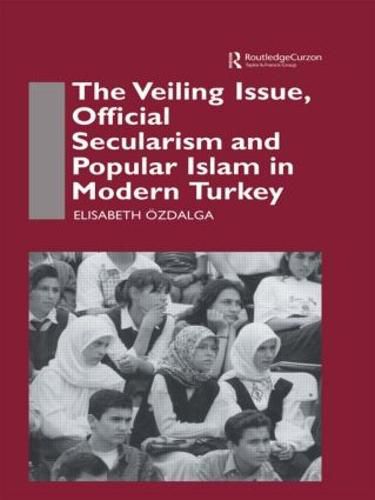
In the Turkish elections of December 1995, the Islamic Welfare Party became the biggest Party in parliament and for the first time in history, an Islamic party had come to power by means of free elections. The rise to power of the Turkish Islamists is a result of several decades of revivalism. In this process the veil has been a prominent symbol of the new religious puritanism, causing resentment among those who regard the bare-headed woman as the symbol of progress and emancipation. In the light of a century-long conflict between secularism and popular Islam, the present study describes the conflict over the veil as it became a burning issue in the decade following the military intervention of 1980 and remains to this day a matter of controversy. While focusing on the issue of veiling, the author also considers the wider picture of tension between official secularism and popular Islam in present-day Turkey. Although this tension is not discounted, the author argues that the fact that the Islamic movement is on the rise does not mean that it threatens the very foundations of modern Turkish society. Whereas the controversies of the nineteenth century could be described as a ‘clash of civilizations’ (between Islam and the West), those of today have shrunk into conflicts over certain cultural symbols that are part of the same globally-expanding technological civilization.
$9.00 standard shipping within Australia
FREE standard shipping within Australia for orders over $100.00
Express & International shipping calculated at checkout
Stock availability can be subject to change without notice. We recommend calling the shop or contacting our online team to check availability of low stock items. Please see our Shopping Online page for more details.
In the Turkish elections of December 1995, the Islamic Welfare Party became the biggest Party in parliament and for the first time in history, an Islamic party had come to power by means of free elections. The rise to power of the Turkish Islamists is a result of several decades of revivalism. In this process the veil has been a prominent symbol of the new religious puritanism, causing resentment among those who regard the bare-headed woman as the symbol of progress and emancipation. In the light of a century-long conflict between secularism and popular Islam, the present study describes the conflict over the veil as it became a burning issue in the decade following the military intervention of 1980 and remains to this day a matter of controversy. While focusing on the issue of veiling, the author also considers the wider picture of tension between official secularism and popular Islam in present-day Turkey. Although this tension is not discounted, the author argues that the fact that the Islamic movement is on the rise does not mean that it threatens the very foundations of modern Turkish society. Whereas the controversies of the nineteenth century could be described as a ‘clash of civilizations’ (between Islam and the West), those of today have shrunk into conflicts over certain cultural symbols that are part of the same globally-expanding technological civilization.
Search our extensive online catalogue.
