Readings Newsletter
Become a Readings Member to make your shopping experience even easier.
Sign in or sign up for free!
You’re not far away from qualifying for FREE standard shipping within Australia
You’ve qualified for FREE standard shipping within Australia
The cart is loading…


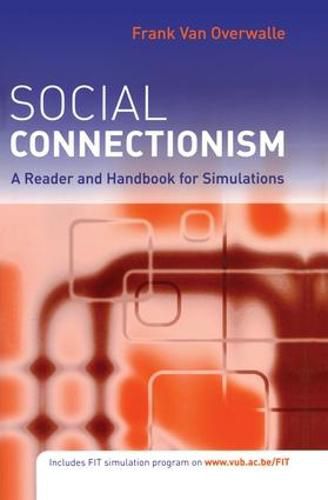
Many of our thoughts and decisions occur without us being conscious of them taking place; connectionism attempts to reveal the internal hidden dynamics that drive the thoughts and actions of both individuals and groups. Connectionist modeling is a radically innovative approach to theorising in psychology, and more recently in the field of social psychology. The connectionist perspective interprets human cognition as a dynamic and adaptive system that learns from its own direct experiences or through indirect communication from others.
Social Connectionism offers an overview of the most recent theoretical developments of connectionist models in social psychology. The volume is divided into four sections, beginning with an introduction and overview of social connectionism. This is followed by chapters on causal attribution, person and group impression formation, and attitudes. Each chapter is followed by simulation exercises that can be carried out using the FIT simulation program; these guided exercises allow the reader to reproduce published results.
Social Connectionism will be invaluable to graduate students and researchers primarily in the field of social psychology, but also in cognitive psychology and connectionist modeling.
$9.00 standard shipping within Australia
FREE standard shipping within Australia for orders over $100.00
Express & International shipping calculated at checkout
Stock availability can be subject to change without notice. We recommend calling the shop or contacting our online team to check availability of low stock items. Please see our Shopping Online page for more details.
Many of our thoughts and decisions occur without us being conscious of them taking place; connectionism attempts to reveal the internal hidden dynamics that drive the thoughts and actions of both individuals and groups. Connectionist modeling is a radically innovative approach to theorising in psychology, and more recently in the field of social psychology. The connectionist perspective interprets human cognition as a dynamic and adaptive system that learns from its own direct experiences or through indirect communication from others.
Social Connectionism offers an overview of the most recent theoretical developments of connectionist models in social psychology. The volume is divided into four sections, beginning with an introduction and overview of social connectionism. This is followed by chapters on causal attribution, person and group impression formation, and attitudes. Each chapter is followed by simulation exercises that can be carried out using the FIT simulation program; these guided exercises allow the reader to reproduce published results.
Social Connectionism will be invaluable to graduate students and researchers primarily in the field of social psychology, but also in cognitive psychology and connectionist modeling.
Search our extensive online catalogue.
