Readings Newsletter
Become a Readings Member to make your shopping experience even easier.
Sign in or sign up for free!
You’re not far away from qualifying for FREE standard shipping within Australia
You’ve qualified for FREE standard shipping within Australia
The cart is loading…


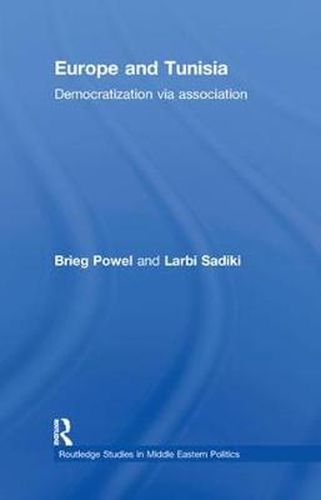
This book is concerned with EU democracy promotion inside Tunisia, the first Arab signatory of an Association Agreement with the EU. Focusing on the content, context, mechanisms, and outcomes of democratization via association, the authors examine whether Tunisia’s specific mode of democratization works in tandem with EU democracy promotion objectives, and the extent to which both adapt association in a way that neither sabotages EU democracy promotion nor undermines Tunisia’s specificity.
Drawing on Arabic, English and French sources, the book deploys a variety of methods and disciplinary approaches - discourse analysis, interviews, democratization theory, foreign policy analysis, security studies, political history, nationalism and identity - and takes an interpretivist perspective, conceiving of political processes as fluid and tentative. The first comprehensive study of the effects of the Union’s Mediterranean democracy promotion strategy on a single recipient state, this book will be relevant to students of Middle East politics, European foreign policy, Euro-Mediterranean studies, democratization theory, and Euro-Arab relations, this book will also be of great interest to researchers, academics and policy-makers.
$9.00 standard shipping within Australia
FREE standard shipping within Australia for orders over $100.00
Express & International shipping calculated at checkout
Stock availability can be subject to change without notice. We recommend calling the shop or contacting our online team to check availability of low stock items. Please see our Shopping Online page for more details.
This book is concerned with EU democracy promotion inside Tunisia, the first Arab signatory of an Association Agreement with the EU. Focusing on the content, context, mechanisms, and outcomes of democratization via association, the authors examine whether Tunisia’s specific mode of democratization works in tandem with EU democracy promotion objectives, and the extent to which both adapt association in a way that neither sabotages EU democracy promotion nor undermines Tunisia’s specificity.
Drawing on Arabic, English and French sources, the book deploys a variety of methods and disciplinary approaches - discourse analysis, interviews, democratization theory, foreign policy analysis, security studies, political history, nationalism and identity - and takes an interpretivist perspective, conceiving of political processes as fluid and tentative. The first comprehensive study of the effects of the Union’s Mediterranean democracy promotion strategy on a single recipient state, this book will be relevant to students of Middle East politics, European foreign policy, Euro-Mediterranean studies, democratization theory, and Euro-Arab relations, this book will also be of great interest to researchers, academics and policy-makers.
Search our extensive online catalogue.
