Readings Newsletter
Become a Readings Member to make your shopping experience even easier.
Sign in or sign up for free!
You’re not far away from qualifying for FREE standard shipping within Australia
You’ve qualified for FREE standard shipping within Australia
The cart is loading…


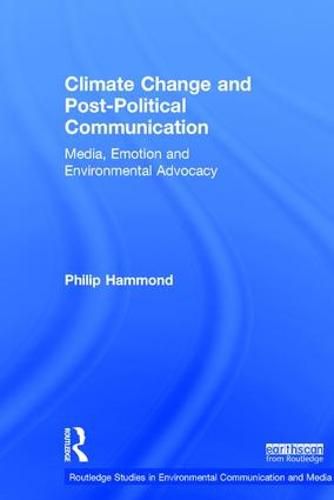
For many years, the objective of environmental campaigners was to push climate change on to the agenda of political leaders and to encourage media attention to the issue. By the first decade of the twenty-first century, it appeared that their efforts had been spectacularly successful. Yet just at the moment when the campaigners’ goals were being achieved, it seemed that the idea of getting the issue into mainstream discussion had been mistaken all along; that the consensus-building approach produced little or no meaningful action. That is the problem of climate change as a ‘post-political’ issue, which is the subject of this book.
Examining how climate change is communicated in politics, news media and celebrity culture, Climate Change and Post-Political Communication explores how the issue has been taken up by elites as potentially offering a sense of purpose or mission in the absence of political visions of the future, and considers the ways in which it provides a focus for much broader anxieties about a loss of modernist political agency and meaning. Drawing on a wide range of literature and case studies, and taking a critical and contextual approach to the analysis of climate change communication, this book will be a valuable resource for students and scholars of environmental studies, communication studies, and media and film studies.
$9.00 standard shipping within Australia
FREE standard shipping within Australia for orders over $100.00
Express & International shipping calculated at checkout
Stock availability can be subject to change without notice. We recommend calling the shop or contacting our online team to check availability of low stock items. Please see our Shopping Online page for more details.
For many years, the objective of environmental campaigners was to push climate change on to the agenda of political leaders and to encourage media attention to the issue. By the first decade of the twenty-first century, it appeared that their efforts had been spectacularly successful. Yet just at the moment when the campaigners’ goals were being achieved, it seemed that the idea of getting the issue into mainstream discussion had been mistaken all along; that the consensus-building approach produced little or no meaningful action. That is the problem of climate change as a ‘post-political’ issue, which is the subject of this book.
Examining how climate change is communicated in politics, news media and celebrity culture, Climate Change and Post-Political Communication explores how the issue has been taken up by elites as potentially offering a sense of purpose or mission in the absence of political visions of the future, and considers the ways in which it provides a focus for much broader anxieties about a loss of modernist political agency and meaning. Drawing on a wide range of literature and case studies, and taking a critical and contextual approach to the analysis of climate change communication, this book will be a valuable resource for students and scholars of environmental studies, communication studies, and media and film studies.
Search our extensive online catalogue.
