Readings Newsletter
Become a Readings Member to make your shopping experience even easier.
Sign in or sign up for free!
You’re not far away from qualifying for FREE standard shipping within Australia
You’ve qualified for FREE standard shipping within Australia
The cart is loading…


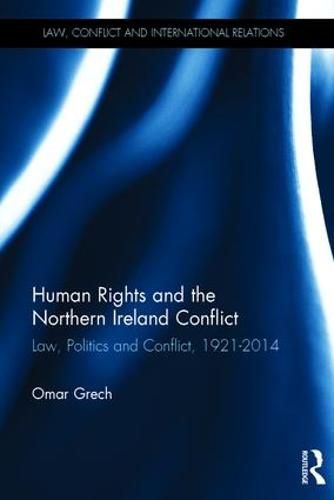
This interdisciplinary book explores the Northern Ireland conflict through a human rights framework.
The book examines the conflict from the creation of the Northern Ireland state in 1921 to 2014. This timeframe allows an analysis of how human rights impacted upon the conflict in its broadest understanding (i.e. the pre-violent conflict, the violent conflict and the post-violent conflict phases). Furthermore, it allows for a better understanding of how the various stages of the conflict impacted upon how human rights are understood in Northern Ireland today. The study’s main findings are that: (i) human rights had a significant impact on the development of the conflict; (ii) human rights violations were both underlying causes and direct causes of the descent into violence; (iii) the conflict coloured the view of human rights held by the main political actors; and (iv) human rights continue to be partially understood through the prism of the conflict. More generally, this interdisciplinary work explores the relationship between law, politics and conflict.
This book will be of much interest to students of human rights, conflict resolution, British politics, law and security studies.
$9.00 standard shipping within Australia
FREE standard shipping within Australia for orders over $100.00
Express & International shipping calculated at checkout
Stock availability can be subject to change without notice. We recommend calling the shop or contacting our online team to check availability of low stock items. Please see our Shopping Online page for more details.
This interdisciplinary book explores the Northern Ireland conflict through a human rights framework.
The book examines the conflict from the creation of the Northern Ireland state in 1921 to 2014. This timeframe allows an analysis of how human rights impacted upon the conflict in its broadest understanding (i.e. the pre-violent conflict, the violent conflict and the post-violent conflict phases). Furthermore, it allows for a better understanding of how the various stages of the conflict impacted upon how human rights are understood in Northern Ireland today. The study’s main findings are that: (i) human rights had a significant impact on the development of the conflict; (ii) human rights violations were both underlying causes and direct causes of the descent into violence; (iii) the conflict coloured the view of human rights held by the main political actors; and (iv) human rights continue to be partially understood through the prism of the conflict. More generally, this interdisciplinary work explores the relationship between law, politics and conflict.
This book will be of much interest to students of human rights, conflict resolution, British politics, law and security studies.
Search our extensive online catalogue.
