Readings Newsletter
Become a Readings Member to make your shopping experience even easier.
Sign in or sign up for free!
You’re not far away from qualifying for FREE standard shipping within Australia
You’ve qualified for FREE standard shipping within Australia
The cart is loading…


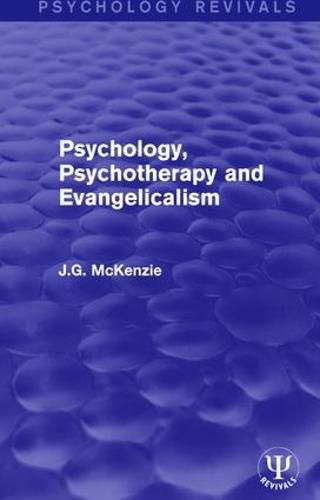
Originally published in 1940, this is a contribution to the better understanding of Evangelical experience and doctrine. It is the author’s belief that the application of psychology to religion in general can make little or no further advance except through the study of particular types of religious experience. The various psychotherapeutic techniques provide the means for such a study, and in this volume they are applied to Evangelicalism.
At first the author attempts to justify this application to Evangelical experience and doctrine, and outlines what he believes to be the essence of Evangelicalism. Part 2 of the book begins the contribution proper with an attempt to get a clear view of conscience and proceeds to salvation and its problems: conversion, guilt, sin, forgiveness, atonement. Part 3 deals with Evangelical experience and doctrine and the spiritual life of the Evangelical, and concludes with some general applications of psychology to Church work.
$9.00 standard shipping within Australia
FREE standard shipping within Australia for orders over $100.00
Express & International shipping calculated at checkout
Stock availability can be subject to change without notice. We recommend calling the shop or contacting our online team to check availability of low stock items. Please see our Shopping Online page for more details.
Originally published in 1940, this is a contribution to the better understanding of Evangelical experience and doctrine. It is the author’s belief that the application of psychology to religion in general can make little or no further advance except through the study of particular types of religious experience. The various psychotherapeutic techniques provide the means for such a study, and in this volume they are applied to Evangelicalism.
At first the author attempts to justify this application to Evangelical experience and doctrine, and outlines what he believes to be the essence of Evangelicalism. Part 2 of the book begins the contribution proper with an attempt to get a clear view of conscience and proceeds to salvation and its problems: conversion, guilt, sin, forgiveness, atonement. Part 3 deals with Evangelical experience and doctrine and the spiritual life of the Evangelical, and concludes with some general applications of psychology to Church work.
Search our extensive online catalogue.
