Readings Newsletter
Become a Readings Member to make your shopping experience even easier.
Sign in or sign up for free!
You’re not far away from qualifying for FREE standard shipping within Australia
You’ve qualified for FREE standard shipping within Australia
The cart is loading…


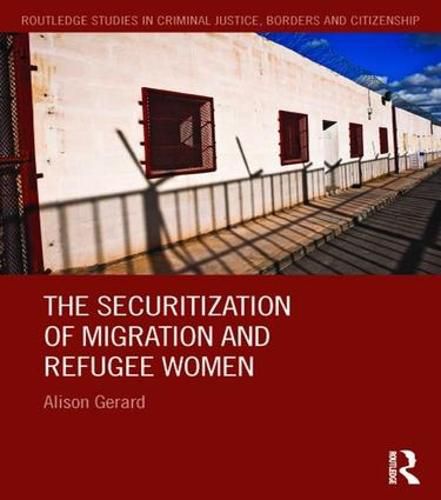
Humanised accounts of restrictions on mobility are rarely the focus of debates on irregular migration. Very little is heard from refugees themselves about why they migrate, their experiences whilst entering the EU or how they navigate reception conditions upon arrival, particularly from a gendered perspective. The Securitization of Migration and Refugee Women fills this gap and explores the journey made by refugee women who have travelled from Somalia to the EU to seek asylum. This book reveals the humanised impact of the securitization of migration, the dominant policy response to irregular migration pursued by governments across the Globe.
The Southern EU Member State of Malta finds itself on the frontline of policing and securing Europe’s southern external borders against transnational migrants and preventing migrants’ on-migration to other Member States within the EU. The securitization of migration has been responsible for restricting access to asylum, diluting rights and entitlements to refugee protection, and punishing those who arrive in the EU without valid passports -a visibly racialised and gendered population. The stories of the refugee women interviewed for this research detail the ways in which refugee protection is being eroded, selectively applied and in some cases specifically designed to exclude.
In contrast to the majority of migration literature, which has largely focused on the male experience, this book focuses on the experiences of refugee women and aims to contribute to the volume of work dedicated to analysing borders from the perspective of those who cross them. This research strengthens existing criminological literature and has the potential to offer insights to policy makers around the world. It will be of interest to academics and students interested in International Crime and Justice, Securitisation, Refugee Law and Border Control, as well as the general reader.
$9.00 standard shipping within Australia
FREE standard shipping within Australia for orders over $100.00
Express & International shipping calculated at checkout
Stock availability can be subject to change without notice. We recommend calling the shop or contacting our online team to check availability of low stock items. Please see our Shopping Online page for more details.
Humanised accounts of restrictions on mobility are rarely the focus of debates on irregular migration. Very little is heard from refugees themselves about why they migrate, their experiences whilst entering the EU or how they navigate reception conditions upon arrival, particularly from a gendered perspective. The Securitization of Migration and Refugee Women fills this gap and explores the journey made by refugee women who have travelled from Somalia to the EU to seek asylum. This book reveals the humanised impact of the securitization of migration, the dominant policy response to irregular migration pursued by governments across the Globe.
The Southern EU Member State of Malta finds itself on the frontline of policing and securing Europe’s southern external borders against transnational migrants and preventing migrants’ on-migration to other Member States within the EU. The securitization of migration has been responsible for restricting access to asylum, diluting rights and entitlements to refugee protection, and punishing those who arrive in the EU without valid passports -a visibly racialised and gendered population. The stories of the refugee women interviewed for this research detail the ways in which refugee protection is being eroded, selectively applied and in some cases specifically designed to exclude.
In contrast to the majority of migration literature, which has largely focused on the male experience, this book focuses on the experiences of refugee women and aims to contribute to the volume of work dedicated to analysing borders from the perspective of those who cross them. This research strengthens existing criminological literature and has the potential to offer insights to policy makers around the world. It will be of interest to academics and students interested in International Crime and Justice, Securitisation, Refugee Law and Border Control, as well as the general reader.
Search our extensive online catalogue.
