Readings Newsletter
Become a Readings Member to make your shopping experience even easier.
Sign in or sign up for free!
You’re not far away from qualifying for FREE standard shipping within Australia
You’ve qualified for FREE standard shipping within Australia
The cart is loading…


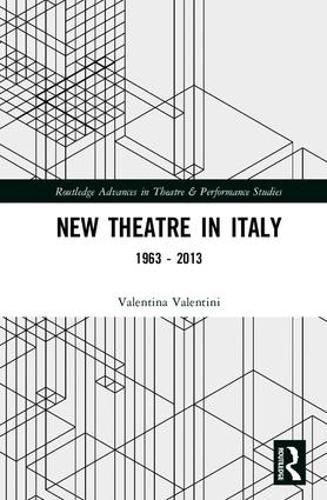
New Theatre in Italy 1963-2013 makes the case for the centrality of late-millennium Italian avant-garde theatre in the development of the new forms of performance that have emerged in the 21st Century. Starting in the Sixties, young artists and militants in Italy reacted to the violence in their streets and ruptures in the family unit that are now recognized as having been harbingers of the end of the global post-war system. As traditional rituals of State and Church faltered, a new generation of cultural operators, largely untrained and driven away from political activism, formed collectives to explore new ways of speaking theatrically, new ways to create and experience performance, and new relationships between performer and spectator. Although the vast majority of the works created were transient, like all performance, their aesthetic and social effects continue to surface today across media on a global scale, affecting visual art, cinema, television and the behavioural aesthetics of social networks.
$9.00 standard shipping within Australia
FREE standard shipping within Australia for orders over $100.00
Express & International shipping calculated at checkout
Stock availability can be subject to change without notice. We recommend calling the shop or contacting our online team to check availability of low stock items. Please see our Shopping Online page for more details.
New Theatre in Italy 1963-2013 makes the case for the centrality of late-millennium Italian avant-garde theatre in the development of the new forms of performance that have emerged in the 21st Century. Starting in the Sixties, young artists and militants in Italy reacted to the violence in their streets and ruptures in the family unit that are now recognized as having been harbingers of the end of the global post-war system. As traditional rituals of State and Church faltered, a new generation of cultural operators, largely untrained and driven away from political activism, formed collectives to explore new ways of speaking theatrically, new ways to create and experience performance, and new relationships between performer and spectator. Although the vast majority of the works created were transient, like all performance, their aesthetic and social effects continue to surface today across media on a global scale, affecting visual art, cinema, television and the behavioural aesthetics of social networks.
Search our extensive online catalogue.
