Readings Newsletter
Become a Readings Member to make your shopping experience even easier.
Sign in or sign up for free!
You’re not far away from qualifying for FREE standard shipping within Australia
You’ve qualified for FREE standard shipping within Australia
The cart is loading…


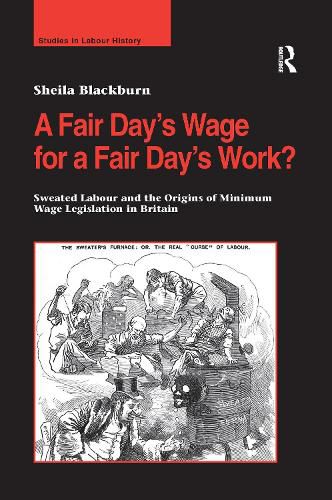
The nature of sweating and the origins of low pay legislation are of fundamental social, economic and moral importance. Although difficult to define, sweating, according to a select committee established to investigate the issue, was characterised by long hours, poor working conditions and above all by low pay. By the beginning of the twentieth century the government estimated that up to a third of the British workforce could be classed as sweated labour, and for the first time in a century began to think about introducing legislation to address the problem.
Whilst historians have written much on unemployment, poverty relief and other such related social and industrial issues, relatively little work has been done on the causes, extent and character of sweated labour. That work which has been done has tended to focus on the tailoring trades in London and Leeds, and fails to give a broad overview of the phenomenon and how it developed and changed over time.
In contrast, this volume adopts a broad national and long-run approach, providing a more holistic understanding of the subject. Rejecting the argument that sweating was merely a London or gender related problem, it paints a picture of a widespread and constantly shifting pattern of sweated labour across the country, that was to eventually persuade the government to introduce legislation in the form of the 1909 Trades Board Act. It was this act, intended to combat sweated labour, which was to form the cornerstone of low pay legislation, and the barrier to the introduction of a minimum wage, for the next 90 years.
$9.00 standard shipping within Australia
FREE standard shipping within Australia for orders over $100.00
Express & International shipping calculated at checkout
Stock availability can be subject to change without notice. We recommend calling the shop or contacting our online team to check availability of low stock items. Please see our Shopping Online page for more details.
The nature of sweating and the origins of low pay legislation are of fundamental social, economic and moral importance. Although difficult to define, sweating, according to a select committee established to investigate the issue, was characterised by long hours, poor working conditions and above all by low pay. By the beginning of the twentieth century the government estimated that up to a third of the British workforce could be classed as sweated labour, and for the first time in a century began to think about introducing legislation to address the problem.
Whilst historians have written much on unemployment, poverty relief and other such related social and industrial issues, relatively little work has been done on the causes, extent and character of sweated labour. That work which has been done has tended to focus on the tailoring trades in London and Leeds, and fails to give a broad overview of the phenomenon and how it developed and changed over time.
In contrast, this volume adopts a broad national and long-run approach, providing a more holistic understanding of the subject. Rejecting the argument that sweating was merely a London or gender related problem, it paints a picture of a widespread and constantly shifting pattern of sweated labour across the country, that was to eventually persuade the government to introduce legislation in the form of the 1909 Trades Board Act. It was this act, intended to combat sweated labour, which was to form the cornerstone of low pay legislation, and the barrier to the introduction of a minimum wage, for the next 90 years.
Search our extensive online catalogue.
