Readings Newsletter
Become a Readings Member to make your shopping experience even easier.
Sign in or sign up for free!
You’re not far away from qualifying for FREE standard shipping within Australia
You’ve qualified for FREE standard shipping within Australia
The cart is loading…


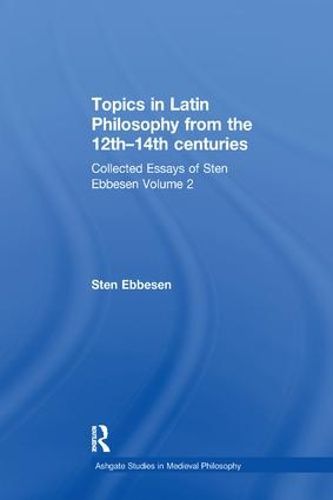
Sten Ebbesen has contributed many works in the field of ancient and medieval philosophy over decades of dedicated research. His crisp and lucid style and his philosophical penetration of often difficult concepts and issues is both clear and intellectually impressive. Ashgate is proud to present this thematically arranged three volume set of his collected essays, each thoroughly revised and updated.
Volume Two: Topics in Latin Philosophy from the 12th -14th Centuries explores issues in medieval philosophy from the time nominalists and other schools competed in twelfth-century Paris to the mature scholasticism of Boethius of Dacia, Radulphus Brito and other ‘modist’ thinkers of the late thirteenth century and, finally, the new nominalism of John Buridan in the fourteenth century.
$9.00 standard shipping within Australia
FREE standard shipping within Australia for orders over $100.00
Express & International shipping calculated at checkout
Stock availability can be subject to change without notice. We recommend calling the shop or contacting our online team to check availability of low stock items. Please see our Shopping Online page for more details.
Sten Ebbesen has contributed many works in the field of ancient and medieval philosophy over decades of dedicated research. His crisp and lucid style and his philosophical penetration of often difficult concepts and issues is both clear and intellectually impressive. Ashgate is proud to present this thematically arranged three volume set of his collected essays, each thoroughly revised and updated.
Volume Two: Topics in Latin Philosophy from the 12th -14th Centuries explores issues in medieval philosophy from the time nominalists and other schools competed in twelfth-century Paris to the mature scholasticism of Boethius of Dacia, Radulphus Brito and other ‘modist’ thinkers of the late thirteenth century and, finally, the new nominalism of John Buridan in the fourteenth century.
Search our extensive online catalogue.
