Readings Newsletter
Become a Readings Member to make your shopping experience even easier.
Sign in or sign up for free!
You’re not far away from qualifying for FREE standard shipping within Australia
You’ve qualified for FREE standard shipping within Australia
The cart is loading…


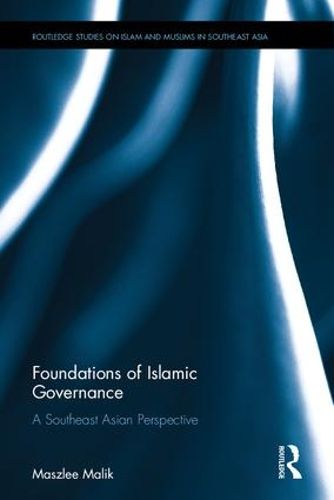
The aim of this book is to explore and analyze the Islamic axioms, foundation principles and values underpinning the field of governance in an attempt to construct the architectonics of a new systemic and dynamic theory and formulate the articulation of ‘Islamic governance’. This discursive and abstract, rather than being an empirical exercise, assumes to produce a ‘good governance’ framework within its own formulation through a value-shaped dynamic model according to maqasid al-Shari'ah (higher objective of Shari'ah) by going beyond the narrow remit of classical and contemporary discussions produced on the topic, which propose a certain institutional model of governance based on the classical juristic (fiqh) method. Through an exclusive analytical discursive approach in this book, readers will find that Islam as one of the major religions in the contemporary world with the claim of promising the underpinning principles and philosophical foundations of worldly affairs and institutions through a micro method of producing homoIslamicus could contribute towards development of societies by establishing a unique model of governance from its explicit ontological worldview through a directed descriptive epistemology.
$9.00 standard shipping within Australia
FREE standard shipping within Australia for orders over $100.00
Express & International shipping calculated at checkout
Stock availability can be subject to change without notice. We recommend calling the shop or contacting our online team to check availability of low stock items. Please see our Shopping Online page for more details.
The aim of this book is to explore and analyze the Islamic axioms, foundation principles and values underpinning the field of governance in an attempt to construct the architectonics of a new systemic and dynamic theory and formulate the articulation of ‘Islamic governance’. This discursive and abstract, rather than being an empirical exercise, assumes to produce a ‘good governance’ framework within its own formulation through a value-shaped dynamic model according to maqasid al-Shari'ah (higher objective of Shari'ah) by going beyond the narrow remit of classical and contemporary discussions produced on the topic, which propose a certain institutional model of governance based on the classical juristic (fiqh) method. Through an exclusive analytical discursive approach in this book, readers will find that Islam as one of the major religions in the contemporary world with the claim of promising the underpinning principles and philosophical foundations of worldly affairs and institutions through a micro method of producing homoIslamicus could contribute towards development of societies by establishing a unique model of governance from its explicit ontological worldview through a directed descriptive epistemology.
Search our extensive online catalogue.
