Readings Newsletter
Become a Readings Member to make your shopping experience even easier.
Sign in or sign up for free!
You’re not far away from qualifying for FREE standard shipping within Australia
You’ve qualified for FREE standard shipping within Australia
The cart is loading…


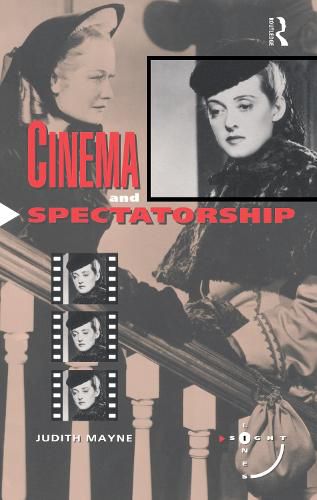
Cinema and Spectatorship is the first book to focus entirely on the history and role of the spectator in contemporary film studies. While 1970s film theory insisted on a distinction betweeen the cinematic subject and film-goers, Judith Mayne suggests that a very real friction between subjects and viewers is in fact central to the study of spectatorship. In the book’s first section Mayne examines three theoretical models of spectatorship: the perceptual, the institutional and the historical, while the second section focuses on case studies which crystallize many of the issues already discussed, concentrating on textual analysis, the “disrupting genre’, "star-gazing’ and finally the audience itself. Case studies incude the place of the spectator in the textual analysis of individual films such as The Picture of Dorian Gray; the construction of Bette Davis’ star persona; fantasies of race and film viewing in Field of Dreams and Ghost; and gay and lesbian audiences as critical audiences. The book provides a very thorough and accessible overview of this complex, fragmented and often controversial area of film theory.
$9.00 standard shipping within Australia
FREE standard shipping within Australia for orders over $100.00
Express & International shipping calculated at checkout
Stock availability can be subject to change without notice. We recommend calling the shop or contacting our online team to check availability of low stock items. Please see our Shopping Online page for more details.
Cinema and Spectatorship is the first book to focus entirely on the history and role of the spectator in contemporary film studies. While 1970s film theory insisted on a distinction betweeen the cinematic subject and film-goers, Judith Mayne suggests that a very real friction between subjects and viewers is in fact central to the study of spectatorship. In the book’s first section Mayne examines three theoretical models of spectatorship: the perceptual, the institutional and the historical, while the second section focuses on case studies which crystallize many of the issues already discussed, concentrating on textual analysis, the “disrupting genre’, "star-gazing’ and finally the audience itself. Case studies incude the place of the spectator in the textual analysis of individual films such as The Picture of Dorian Gray; the construction of Bette Davis’ star persona; fantasies of race and film viewing in Field of Dreams and Ghost; and gay and lesbian audiences as critical audiences. The book provides a very thorough and accessible overview of this complex, fragmented and often controversial area of film theory.
Search our extensive online catalogue.
