Readings Newsletter
Become a Readings Member to make your shopping experience even easier.
Sign in or sign up for free!
You’re not far away from qualifying for FREE standard shipping within Australia
You’ve qualified for FREE standard shipping within Australia
The cart is loading…


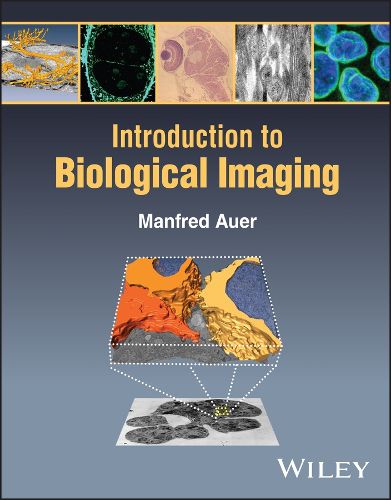
Discover what biological imaging is able to accomplish in this up-to-date textbook
One of the fundamental goals of biology is to understand how living organisms establish and maintain their spatiotemporal organization of the biochemical, cell biological and developmental biology processes that sustain life. Biological systems are inherently complex with a large number of components needed to sustain cellular function. In order to understand any complex system, one must determine its composition by identifying the components it is made of, how each of these components function and carry out their specific task, and how they interact with one another to function together. To grasp the link of such changes to physiological cell and tissue function and/or pathogenesis/disease progression, we need to understand how modifications alter macromolecular function, macromolecular interactions, and/or spatiotemporal distribution and overall supramolecular structural organization. Biological imaging holds the key to understanding spatiotemporal organization, and will thus be increasingly important for the next generations of biological and biochemical researchers.
Introduction to Biological Imaging provides the first comprehensive textbook surveying this subject. It elucidates the fundamental principles underlying the capture and production of bioimages, the requirements of image analysis and interpretation, and some key problems and solutions in bioimaging. It includes everything experimental biologists need to incorporate appropriate bioimaging solutions into their work.
Introduction to Biological Imaging readers will also find:
Coverage of all major types of biological imaging, including medical imaging, cellular imaging, macromolecular imaging, and more Advice on preparing samples for various imaging methods Specific examples in each chapter connecting bioimaging process to the production of real experimental data
Introduction to Biological Imaging is a valuable introduction for undergraduate or graduate students in courses relating to bioimaging, as well as scientists and researchers in the biological and medical fields who want a one-stop reference for the full range of imaging techniques.
$9.00 standard shipping within Australia
FREE standard shipping within Australia for orders over $100.00
Express & International shipping calculated at checkout
Stock availability can be subject to change without notice. We recommend calling the shop or contacting our online team to check availability of low stock items. Please see our Shopping Online page for more details.
Discover what biological imaging is able to accomplish in this up-to-date textbook
One of the fundamental goals of biology is to understand how living organisms establish and maintain their spatiotemporal organization of the biochemical, cell biological and developmental biology processes that sustain life. Biological systems are inherently complex with a large number of components needed to sustain cellular function. In order to understand any complex system, one must determine its composition by identifying the components it is made of, how each of these components function and carry out their specific task, and how they interact with one another to function together. To grasp the link of such changes to physiological cell and tissue function and/or pathogenesis/disease progression, we need to understand how modifications alter macromolecular function, macromolecular interactions, and/or spatiotemporal distribution and overall supramolecular structural organization. Biological imaging holds the key to understanding spatiotemporal organization, and will thus be increasingly important for the next generations of biological and biochemical researchers.
Introduction to Biological Imaging provides the first comprehensive textbook surveying this subject. It elucidates the fundamental principles underlying the capture and production of bioimages, the requirements of image analysis and interpretation, and some key problems and solutions in bioimaging. It includes everything experimental biologists need to incorporate appropriate bioimaging solutions into their work.
Introduction to Biological Imaging readers will also find:
Coverage of all major types of biological imaging, including medical imaging, cellular imaging, macromolecular imaging, and more Advice on preparing samples for various imaging methods Specific examples in each chapter connecting bioimaging process to the production of real experimental data
Introduction to Biological Imaging is a valuable introduction for undergraduate or graduate students in courses relating to bioimaging, as well as scientists and researchers in the biological and medical fields who want a one-stop reference for the full range of imaging techniques.
Search our extensive online catalogue.
