Readings Newsletter
Become a Readings Member to make your shopping experience even easier.
Sign in or sign up for free!
You’re not far away from qualifying for FREE standard shipping within Australia
You’ve qualified for FREE standard shipping within Australia
The cart is loading…


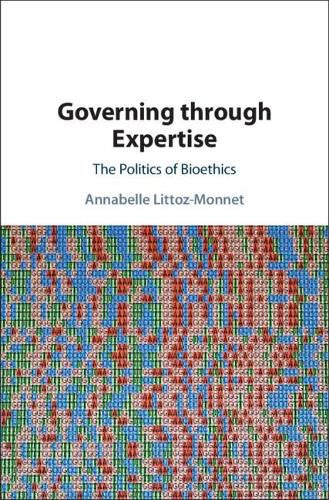
Littoz-Monnet provides a fresh analysis of the enmeshment of expert knowledge with politics in global governance, through a unique investigation of bioethical expertise, an intriguing form of ‘expert knowledge’ which claims authority in the ethical analysis of issues that arise in relation to biomedicine, the life sciences and new fields of technological innovation. She makes the case that the mobilisation of ethics experts does not always arise from a motivation to rationalise governance. Instead, mobilising ethics experts - who are endowed with a unique double-edged authority, both ‘democratic’ and ‘epistemic’ - can help policy-makers manoeuvre policy conflicts on scientific and technological innovations and make their pro-science and innovation agendas possible. Bioethical expertise is indeed shaped in a political and iterative space between experts and those who do policy. The book reveals the mechanisms through which certain global governance narratives, as well as the types of expertise they rely on, remain stable even when they are contested.
$9.00 standard shipping within Australia
FREE standard shipping within Australia for orders over $100.00
Express & International shipping calculated at checkout
Stock availability can be subject to change without notice. We recommend calling the shop or contacting our online team to check availability of low stock items. Please see our Shopping Online page for more details.
Littoz-Monnet provides a fresh analysis of the enmeshment of expert knowledge with politics in global governance, through a unique investigation of bioethical expertise, an intriguing form of ‘expert knowledge’ which claims authority in the ethical analysis of issues that arise in relation to biomedicine, the life sciences and new fields of technological innovation. She makes the case that the mobilisation of ethics experts does not always arise from a motivation to rationalise governance. Instead, mobilising ethics experts - who are endowed with a unique double-edged authority, both ‘democratic’ and ‘epistemic’ - can help policy-makers manoeuvre policy conflicts on scientific and technological innovations and make their pro-science and innovation agendas possible. Bioethical expertise is indeed shaped in a political and iterative space between experts and those who do policy. The book reveals the mechanisms through which certain global governance narratives, as well as the types of expertise they rely on, remain stable even when they are contested.
Search our extensive online catalogue.
