Readings Newsletter
Become a Readings Member to make your shopping experience even easier.
Sign in or sign up for free!
You’re not far away from qualifying for FREE standard shipping within Australia
You’ve qualified for FREE standard shipping within Australia
The cart is loading…


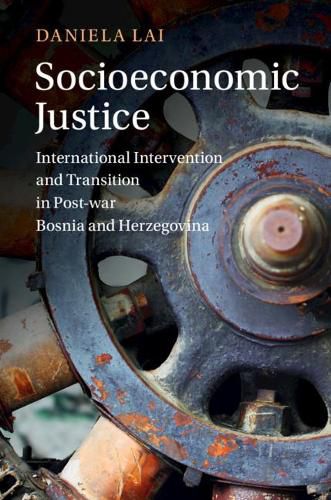
Does socioeconomic justice belong within transitional justice? Daniela Lai provides the first systematic analysis of experiences of socioeconomic violence during war and how they give rise to strong, but unheeded justice claims in the aftermath. She redefines socioeconomic justice as the redress of violence rooted in the political economy of conflict, and transitional justice as a social practice that belongs among grassroots activists as much as it does in courtrooms and truth commissions. Furthermore, she examines the role of international actors that rely on narrow, legalistic approaches to transitional justice, while also promoting economic reforms that hinder the emergence and pursuit of socioeconomic justice claims by conflict-affected communities. Drawing on a unique set of in-depth interviews with Bosnian communities, international officials and grassroots activists, this book provides new theoretical and empirical insights on the link between justice and political economy, on international interventions, and on Bosnia’s post-war and post-socialist transformation.
$9.00 standard shipping within Australia
FREE standard shipping within Australia for orders over $100.00
Express & International shipping calculated at checkout
Stock availability can be subject to change without notice. We recommend calling the shop or contacting our online team to check availability of low stock items. Please see our Shopping Online page for more details.
Does socioeconomic justice belong within transitional justice? Daniela Lai provides the first systematic analysis of experiences of socioeconomic violence during war and how they give rise to strong, but unheeded justice claims in the aftermath. She redefines socioeconomic justice as the redress of violence rooted in the political economy of conflict, and transitional justice as a social practice that belongs among grassroots activists as much as it does in courtrooms and truth commissions. Furthermore, she examines the role of international actors that rely on narrow, legalistic approaches to transitional justice, while also promoting economic reforms that hinder the emergence and pursuit of socioeconomic justice claims by conflict-affected communities. Drawing on a unique set of in-depth interviews with Bosnian communities, international officials and grassroots activists, this book provides new theoretical and empirical insights on the link between justice and political economy, on international interventions, and on Bosnia’s post-war and post-socialist transformation.
Search our extensive online catalogue.
