Readings Newsletter
Become a Readings Member to make your shopping experience even easier.
Sign in or sign up for free!
You’re not far away from qualifying for FREE standard shipping within Australia
You’ve qualified for FREE standard shipping within Australia
The cart is loading…


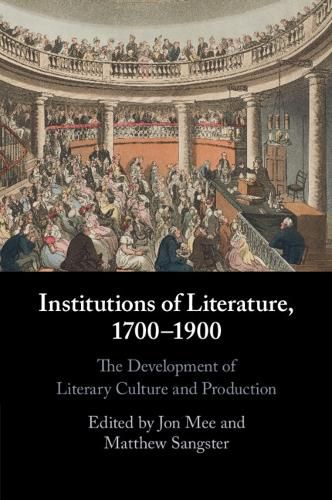
This collection provides students and researchers with a new and lively understanding of the role of institutions in the production, reception, and meaning of literature in the period 1700-1900. The period saw a fundamental transition from a patronage system to a marketplace in which institutions played an important mediating role between writers and readers, a shift with consequences that continue to resonate today. Often producers themselves, institutions processed and claimed authority over a variety of cultural domains that never simply tessellated into any unified system. The collection's primary concerns are British and imperial environments, with a comparative German case study, but it offers encouragement for its approaches to be taken up in a variety of other cultural contexts. From the Post Office to museums, from bricks and mortar to less tangible institutions like authorship and genre, this collection opens up a new field for literary studies.
$9.00 standard shipping within Australia
FREE standard shipping within Australia for orders over $100.00
Express & International shipping calculated at checkout
Stock availability can be subject to change without notice. We recommend calling the shop or contacting our online team to check availability of low stock items. Please see our Shopping Online page for more details.
This collection provides students and researchers with a new and lively understanding of the role of institutions in the production, reception, and meaning of literature in the period 1700-1900. The period saw a fundamental transition from a patronage system to a marketplace in which institutions played an important mediating role between writers and readers, a shift with consequences that continue to resonate today. Often producers themselves, institutions processed and claimed authority over a variety of cultural domains that never simply tessellated into any unified system. The collection's primary concerns are British and imperial environments, with a comparative German case study, but it offers encouragement for its approaches to be taken up in a variety of other cultural contexts. From the Post Office to museums, from bricks and mortar to less tangible institutions like authorship and genre, this collection opens up a new field for literary studies.
Search our extensive online catalogue.
