Readings Newsletter
Become a Readings Member to make your shopping experience even easier.
Sign in or sign up for free!
You’re not far away from qualifying for FREE standard shipping within Australia
You’ve qualified for FREE standard shipping within Australia
The cart is loading…


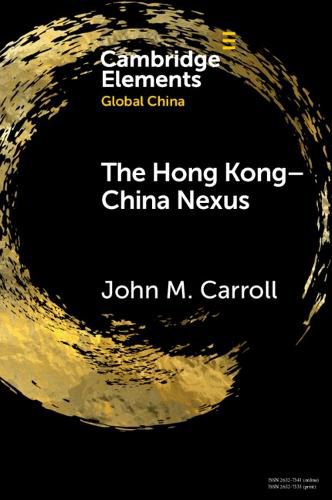
The Occupy Central/Umbrella Movement of 2014 and the anti-extradition protests of 2019 revealed how much Hong Kong’s relationship with mainland China has deteriorated since the former British colony returned to Chinese sovereignty in July 1997. With mutual distrust and suspicion at an all-time high, many Hong Kong people have become increasingly hostile toward the Chinese government and the mainland in general, identifying themselves as Hongkongers rather than as Chinese. Yet, as John Carroll shows, for more than 150 years, colonial Hong Kong and China not only coexisted with but benefited each other, even during the anti-imperialist campaigns of the Republican and Communist eras. The porous boundary between Hong Kong and China enabled the two to use each other economically, politically, socially, and culturally. The Hong Kong-China nexus, although firmly embedded in global dynamics of colonialism, Cold War politics, and capitalist expansion, defies many common assumptions about nationalism, colonialism, and decolonization.
$9.00 standard shipping within Australia
FREE standard shipping within Australia for orders over $100.00
Express & International shipping calculated at checkout
Stock availability can be subject to change without notice. We recommend calling the shop or contacting our online team to check availability of low stock items. Please see our Shopping Online page for more details.
The Occupy Central/Umbrella Movement of 2014 and the anti-extradition protests of 2019 revealed how much Hong Kong’s relationship with mainland China has deteriorated since the former British colony returned to Chinese sovereignty in July 1997. With mutual distrust and suspicion at an all-time high, many Hong Kong people have become increasingly hostile toward the Chinese government and the mainland in general, identifying themselves as Hongkongers rather than as Chinese. Yet, as John Carroll shows, for more than 150 years, colonial Hong Kong and China not only coexisted with but benefited each other, even during the anti-imperialist campaigns of the Republican and Communist eras. The porous boundary between Hong Kong and China enabled the two to use each other economically, politically, socially, and culturally. The Hong Kong-China nexus, although firmly embedded in global dynamics of colonialism, Cold War politics, and capitalist expansion, defies many common assumptions about nationalism, colonialism, and decolonization.
Search our extensive online catalogue.
