Readings Newsletter
Become a Readings Member to make your shopping experience even easier.
Sign in or sign up for free!
You’re not far away from qualifying for FREE standard shipping within Australia
You’ve qualified for FREE standard shipping within Australia
The cart is loading…


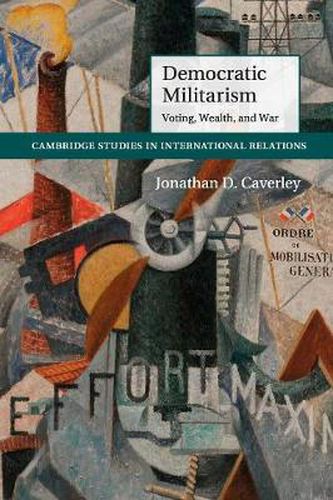
Why are democracies pursuing more military conflicts, but achieving worse results? Democratic Militarism shows that a combination of economic inequality and military technical change enables an average voter to pay very little of the costs of large militaries and armed conflict, in terms of both death and taxes. Jonathan Caverley provides an original statistical analysis of public opinion and international aggression, combined with historical evidence from the late Victorian British Empire, the US Vietnam War effort, and Israel’s Second Lebanon War. This book undermines conventional wisdom regarding democracy’s exceptional foreign policy characteristics, and challenges elite-centered explanations for poor foreign policy. This accessible and wide ranging book offers a new account of democratic warfare, and will help readers to understand the implications of the revolution in military affairs.
$9.00 standard shipping within Australia
FREE standard shipping within Australia for orders over $100.00
Express & International shipping calculated at checkout
Stock availability can be subject to change without notice. We recommend calling the shop or contacting our online team to check availability of low stock items. Please see our Shopping Online page for more details.
Why are democracies pursuing more military conflicts, but achieving worse results? Democratic Militarism shows that a combination of economic inequality and military technical change enables an average voter to pay very little of the costs of large militaries and armed conflict, in terms of both death and taxes. Jonathan Caverley provides an original statistical analysis of public opinion and international aggression, combined with historical evidence from the late Victorian British Empire, the US Vietnam War effort, and Israel’s Second Lebanon War. This book undermines conventional wisdom regarding democracy’s exceptional foreign policy characteristics, and challenges elite-centered explanations for poor foreign policy. This accessible and wide ranging book offers a new account of democratic warfare, and will help readers to understand the implications of the revolution in military affairs.
Search our extensive online catalogue.
