Readings Newsletter
Become a Readings Member to make your shopping experience even easier.
Sign in or sign up for free!
You’re not far away from qualifying for FREE standard shipping within Australia
You’ve qualified for FREE standard shipping within Australia
The cart is loading…


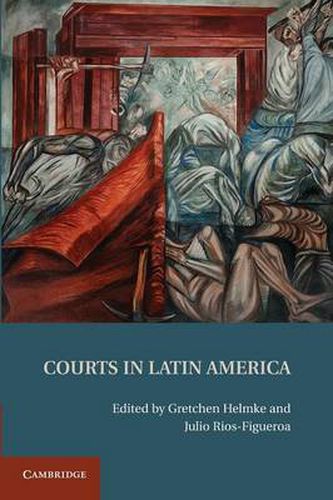
To what extent do courts in Latin America protect individual rights and limit governments? This volume answers these fundamental questions by bringing together today’s leading scholars of judicial politics. Drawing on examples from Argentina, Brazil, Chile, Mexico, Colombia, Costa Rica and Bolivia, the authors demonstrate that there is widespread variation in the performance of Latin America’s constitutional courts. In accounting for this variation, the contributors push forward ongoing debates about what motivates judges; whether institutions, partisan politics and public support shape inter-branch relations; and the importance of judicial attitudes and legal culture. The authors deploy a range of methods, including qualitative case studies, paired country comparisons, statistical analysis and game theory.
$9.00 standard shipping within Australia
FREE standard shipping within Australia for orders over $100.00
Express & International shipping calculated at checkout
Stock availability can be subject to change without notice. We recommend calling the shop or contacting our online team to check availability of low stock items. Please see our Shopping Online page for more details.
To what extent do courts in Latin America protect individual rights and limit governments? This volume answers these fundamental questions by bringing together today’s leading scholars of judicial politics. Drawing on examples from Argentina, Brazil, Chile, Mexico, Colombia, Costa Rica and Bolivia, the authors demonstrate that there is widespread variation in the performance of Latin America’s constitutional courts. In accounting for this variation, the contributors push forward ongoing debates about what motivates judges; whether institutions, partisan politics and public support shape inter-branch relations; and the importance of judicial attitudes and legal culture. The authors deploy a range of methods, including qualitative case studies, paired country comparisons, statistical analysis and game theory.
Search our extensive online catalogue.
