Readings Newsletter
Become a Readings Member to make your shopping experience even easier.
Sign in or sign up for free!
You’re not far away from qualifying for FREE standard shipping within Australia
You’ve qualified for FREE standard shipping within Australia
The cart is loading…


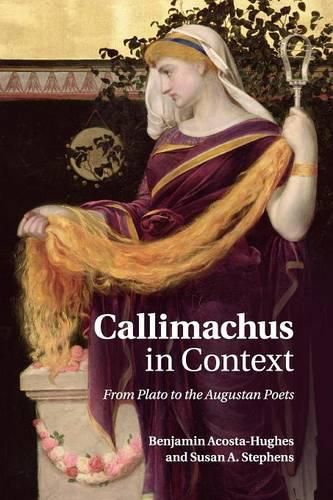
Scholarly reception has bequeathed two Callimachuses: the Roman version is a poet of elegant non-heroic poetry (usually erotic elegy), represented by a handful of intertexts with a recurring set of images - slender Muse, instructing divinity, small voice, pure waters; the Greek version emphasizes a learned scholar who includes literary criticism within his poetry, an encomiast of the Ptolemies, a poet of the book whose narratives are often understood as metapoetic. This study aims to situate these Callimachuses within a series of interlocking historical and intellectual contexts in order better to understand how they arose. In this narrative of his poetics and poetic reception four main sources of creative opportunism are identified: Callimachus’ reactions to philosophers and literary critics as arbiters of poetic authority, the potential of the text as a venue for performance, awareness of Alexandria as a new place, and finally, his attraction for Roman poets.
$9.00 standard shipping within Australia
FREE standard shipping within Australia for orders over $100.00
Express & International shipping calculated at checkout
Stock availability can be subject to change without notice. We recommend calling the shop or contacting our online team to check availability of low stock items. Please see our Shopping Online page for more details.
Scholarly reception has bequeathed two Callimachuses: the Roman version is a poet of elegant non-heroic poetry (usually erotic elegy), represented by a handful of intertexts with a recurring set of images - slender Muse, instructing divinity, small voice, pure waters; the Greek version emphasizes a learned scholar who includes literary criticism within his poetry, an encomiast of the Ptolemies, a poet of the book whose narratives are often understood as metapoetic. This study aims to situate these Callimachuses within a series of interlocking historical and intellectual contexts in order better to understand how they arose. In this narrative of his poetics and poetic reception four main sources of creative opportunism are identified: Callimachus’ reactions to philosophers and literary critics as arbiters of poetic authority, the potential of the text as a venue for performance, awareness of Alexandria as a new place, and finally, his attraction for Roman poets.
Search our extensive online catalogue.
