Readings Newsletter
Become a Readings Member to make your shopping experience even easier.
Sign in or sign up for free!
You’re not far away from qualifying for FREE standard shipping within Australia
You’ve qualified for FREE standard shipping within Australia
The cart is loading…


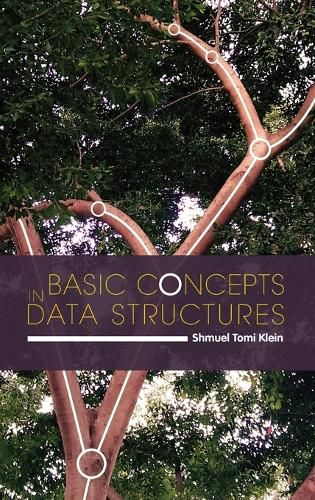
Data structures are the fundamental building blocks of any computer program, used for storing, representing and manipulating data in a computer. This text presents the basic concepts of data structures as part of the art of writing computer programs. The author concentrates on the fundamentals of what should be done to solve a problem efficiently rather than technical implementation details. The text includes pseudocode and covers all the most common data structures, such as queues, stacks, trees, heaps, and hash tables, along with the basics of searching, sorting, and coding. This book can supplement any undergraduate algorithms or discrete math course and will also be accessible to students and researchers in other quantitative disciplines. No prerequisites beyond introductory programming and basic mathematics are required, and the accessible, conceptual presentation will appeal to undergraduates in many quantitative fields. Carefully designed problem sets with selected solutions will allow students to test their understanding.
$9.00 standard shipping within Australia
FREE standard shipping within Australia for orders over $100.00
Express & International shipping calculated at checkout
Stock availability can be subject to change without notice. We recommend calling the shop or contacting our online team to check availability of low stock items. Please see our Shopping Online page for more details.
Data structures are the fundamental building blocks of any computer program, used for storing, representing and manipulating data in a computer. This text presents the basic concepts of data structures as part of the art of writing computer programs. The author concentrates on the fundamentals of what should be done to solve a problem efficiently rather than technical implementation details. The text includes pseudocode and covers all the most common data structures, such as queues, stacks, trees, heaps, and hash tables, along with the basics of searching, sorting, and coding. This book can supplement any undergraduate algorithms or discrete math course and will also be accessible to students and researchers in other quantitative disciplines. No prerequisites beyond introductory programming and basic mathematics are required, and the accessible, conceptual presentation will appeal to undergraduates in many quantitative fields. Carefully designed problem sets with selected solutions will allow students to test their understanding.
Search our extensive online catalogue.
