Readings Newsletter
Become a Readings Member to make your shopping experience even easier.
Sign in or sign up for free!
You’re not far away from qualifying for FREE standard shipping within Australia
You’ve qualified for FREE standard shipping within Australia
The cart is loading…


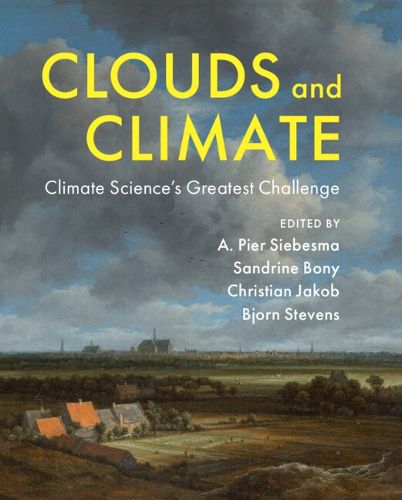
Cloud research is a rapidly developing branch of climate science that’s vital to climate modelling. With new observational and simulation technologies our knowledge of clouds and their role in the warming climate is accelerating. This book provides a comprehensive overview of research on clouds and their role in our present and future climate, covering theoretical, observational, and modelling perspectives. Part I discusses clouds from three different perspectives: as particles, light and fluid. Part II describes our capability to model clouds, ranging from theoretical conceptual models to applied parameterised representations. Part III describes the interaction of clouds with the large-scale circulation in the tropics, mid-latitudes, and polar regions. Part IV describes how clouds are perturbed by aerosols, the land-surface, and global warming. Each chapter contains end-of-chapter exercises and further reading sections, making this an ideal resource for advanced students and researchers in climatology, atmospheric science, meteorology, and climate change.
$9.00 standard shipping within Australia
FREE standard shipping within Australia for orders over $100.00
Express & International shipping calculated at checkout
Stock availability can be subject to change without notice. We recommend calling the shop or contacting our online team to check availability of low stock items. Please see our Shopping Online page for more details.
Cloud research is a rapidly developing branch of climate science that’s vital to climate modelling. With new observational and simulation technologies our knowledge of clouds and their role in the warming climate is accelerating. This book provides a comprehensive overview of research on clouds and their role in our present and future climate, covering theoretical, observational, and modelling perspectives. Part I discusses clouds from three different perspectives: as particles, light and fluid. Part II describes our capability to model clouds, ranging from theoretical conceptual models to applied parameterised representations. Part III describes the interaction of clouds with the large-scale circulation in the tropics, mid-latitudes, and polar regions. Part IV describes how clouds are perturbed by aerosols, the land-surface, and global warming. Each chapter contains end-of-chapter exercises and further reading sections, making this an ideal resource for advanced students and researchers in climatology, atmospheric science, meteorology, and climate change.
Search our extensive online catalogue.
