Readings Newsletter
Become a Readings Member to make your shopping experience even easier.
Sign in or sign up for free!
You’re not far away from qualifying for FREE standard shipping within Australia
You’ve qualified for FREE standard shipping within Australia
The cart is loading…


This title is printed to order. This book may have been self-published. If so, we cannot guarantee the quality of the content. In the main most books will have gone through the editing process however some may not. We therefore suggest that you be aware of this before ordering this book. If in doubt check either the author or publisher’s details as we are unable to accept any returns unless they are faulty. Please contact us if you have any questions.
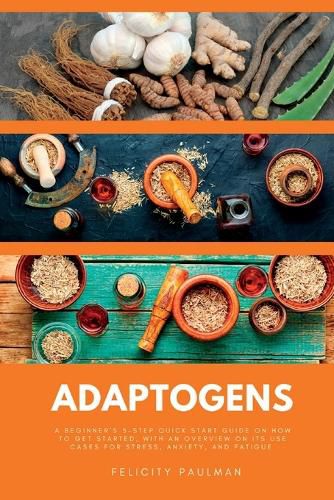
There is a class of herbs known as adaptogens that are known for their ability to assist the body in adapting to many types of stress, including those that are mental, emotional, or physical. They achieve their effects by normalizing and regulating the body's reaction to stress, which enables the body to become better prepared to deal with any challenges it faces.
Adaptogens have been utilized for hundreds of years in both traditional Chinese medicine and Ayurvedic medicine as a means of assisting patients in managing the negative effects of stress and keeping their bodies in the best possible condition. They have seen a rise in popularity in recent years in Western countries, particularly as an increasing number of individuals look for all-natural methods by which they may alleviate stress and enhance their general health and well-being.
There are a wide variety of adaptogenic plants, but some of the more well-known ones include ashwagandha, maca root, holy basil, ginseng, and Rhodiola Rosea. Other adaptogenic plants include holy basil and ginseng. Adaptogens come in a wide variety of plant forms, but they all have one thing in common: the capacity to assist the body in developing more effective coping mechanisms in response to stress.
Consuming adaptogenic herbs may have several positive effects on one's health, including but not limited to increased energy levels, decreased anxiety and depression symptoms, improved sleep quality, enhanced cognitive function, improved athletic performance, reduced inflammation, and improved fertility.
Even though research on adaptogens is still in its early stages, there is intriguing evidence that these herbs can be useful in controlling stress and improving general health. Adaptogenic herbs are something you should think about using if you're seeking a natural approach to increase your energy levels, decrease your stress, and enhance your general well-being.
In this beginner's guide, we'll talk more in detail about the following subtopics of adaptogens:
What are adaptogens? How do adaptogens work? Properties of adaptogens Types of adaptogens What are the adaptogens forms available in the market? What are the benefits of adaptogens? Use cases of adaptogens Risks of using adaptogens Side effects of adaptogens A potential 5-step plan on how to get started using adaptogens
$9.00 standard shipping within Australia
FREE standard shipping within Australia for orders over $100.00
Express & International shipping calculated at checkout
Stock availability can be subject to change without notice. We recommend calling the shop or contacting our online team to check availability of low stock items. Please see our Shopping Online page for more details.
This title is printed to order. This book may have been self-published. If so, we cannot guarantee the quality of the content. In the main most books will have gone through the editing process however some may not. We therefore suggest that you be aware of this before ordering this book. If in doubt check either the author or publisher’s details as we are unable to accept any returns unless they are faulty. Please contact us if you have any questions.
There is a class of herbs known as adaptogens that are known for their ability to assist the body in adapting to many types of stress, including those that are mental, emotional, or physical. They achieve their effects by normalizing and regulating the body's reaction to stress, which enables the body to become better prepared to deal with any challenges it faces.
Adaptogens have been utilized for hundreds of years in both traditional Chinese medicine and Ayurvedic medicine as a means of assisting patients in managing the negative effects of stress and keeping their bodies in the best possible condition. They have seen a rise in popularity in recent years in Western countries, particularly as an increasing number of individuals look for all-natural methods by which they may alleviate stress and enhance their general health and well-being.
There are a wide variety of adaptogenic plants, but some of the more well-known ones include ashwagandha, maca root, holy basil, ginseng, and Rhodiola Rosea. Other adaptogenic plants include holy basil and ginseng. Adaptogens come in a wide variety of plant forms, but they all have one thing in common: the capacity to assist the body in developing more effective coping mechanisms in response to stress.
Consuming adaptogenic herbs may have several positive effects on one's health, including but not limited to increased energy levels, decreased anxiety and depression symptoms, improved sleep quality, enhanced cognitive function, improved athletic performance, reduced inflammation, and improved fertility.
Even though research on adaptogens is still in its early stages, there is intriguing evidence that these herbs can be useful in controlling stress and improving general health. Adaptogenic herbs are something you should think about using if you're seeking a natural approach to increase your energy levels, decrease your stress, and enhance your general well-being.
In this beginner's guide, we'll talk more in detail about the following subtopics of adaptogens:
What are adaptogens? How do adaptogens work? Properties of adaptogens Types of adaptogens What are the adaptogens forms available in the market? What are the benefits of adaptogens? Use cases of adaptogens Risks of using adaptogens Side effects of adaptogens A potential 5-step plan on how to get started using adaptogens
Search our extensive online catalogue.
