Readings Newsletter
Become a Readings Member to make your shopping experience even easier.
Sign in or sign up for free!
You’re not far away from qualifying for FREE standard shipping within Australia
You’ve qualified for FREE standard shipping within Australia
The cart is loading…


This title is printed to order. This book may have been self-published. If so, we cannot guarantee the quality of the content. In the main most books will have gone through the editing process however some may not. We therefore suggest that you be aware of this before ordering this book. If in doubt check either the author or publisher’s details as we are unable to accept any returns unless they are faulty. Please contact us if you have any questions.
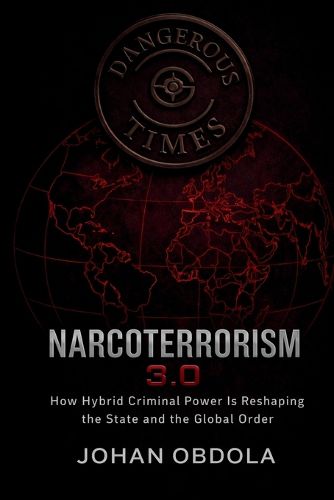
Narcoterrorism 3.0 is a strategic and analytical examination of how organized crime, terrorism, corruption, and fragile state structures have converged into a new global system of power.
This book moves beyond traditional narratives of crime and violence to explore how narcotrafficking has evolved from an illicit economic activity into a geopolitical force capable of reshaping governance, undermining institutions, and destabilizing entire regions.
Drawing from decades of field experience, intelligence analysis, and geopolitical research, Johan Obdola maps the transformation of criminal networks into transnational power actors - and explains how these networks now intersect with extremist movements, corrupt elites, and global financial systems.
Rather than treating terrorism, organized crime, and political corruption as separate phenomena, Narcoterrorism 3.0 shows how they function as a single, integrated system - a hybrid architecture of power that operates across borders, institutions, and legal frameworks.
The book addresses critical questions such as:
Narcoterrorism 3.0 is written for policymakers, security professionals, analysts, journalists, and institutional leaders seeking to understand one of the most consequential and least understood transformations of the modern world.
This is not a book about crime.
It is a book about power.
$9.00 standard shipping within Australia
FREE standard shipping within Australia for orders over $100.00
Express & International shipping calculated at checkout
Stock availability can be subject to change without notice. We recommend calling the shop or contacting our online team to check availability of low stock items. Please see our Shopping Online page for more details.
This title is printed to order. This book may have been self-published. If so, we cannot guarantee the quality of the content. In the main most books will have gone through the editing process however some may not. We therefore suggest that you be aware of this before ordering this book. If in doubt check either the author or publisher’s details as we are unable to accept any returns unless they are faulty. Please contact us if you have any questions.
Narcoterrorism 3.0 is a strategic and analytical examination of how organized crime, terrorism, corruption, and fragile state structures have converged into a new global system of power.
This book moves beyond traditional narratives of crime and violence to explore how narcotrafficking has evolved from an illicit economic activity into a geopolitical force capable of reshaping governance, undermining institutions, and destabilizing entire regions.
Drawing from decades of field experience, intelligence analysis, and geopolitical research, Johan Obdola maps the transformation of criminal networks into transnational power actors - and explains how these networks now intersect with extremist movements, corrupt elites, and global financial systems.
Rather than treating terrorism, organized crime, and political corruption as separate phenomena, Narcoterrorism 3.0 shows how they function as a single, integrated system - a hybrid architecture of power that operates across borders, institutions, and legal frameworks.
The book addresses critical questions such as:
Narcoterrorism 3.0 is written for policymakers, security professionals, analysts, journalists, and institutional leaders seeking to understand one of the most consequential and least understood transformations of the modern world.
This is not a book about crime.
It is a book about power.
Search our extensive online catalogue.
