Readings Newsletter
Become a Readings Member to make your shopping experience even easier.
Sign in or sign up for free!
You’re not far away from qualifying for FREE standard shipping within Australia
You’ve qualified for FREE standard shipping within Australia
The cart is loading…


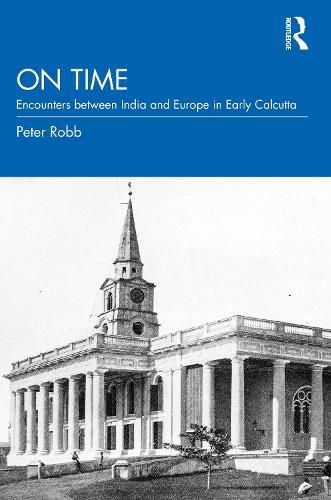
This book explores the intersection of public and private temporal systems. Examining Calcutta between 1780 and 1830, it reveals how time functioned as both a regulatory mechanism of emerging colonial governance and a deeply personal construct that continued to reflect pre-colonial norms and practices.
The author navigates the complex temporal landscape of early colonial Calcutta, where European clock-based standardisation encountered and co-existed with indigenous temporal frameworks. The analysis illuminates how time manifested across diverse contexts-from distance perception and collective memory to religious festivals, scientific endeavours, financial transactions and labour relations. It assesses extensions of law, imperfections of policy and both European and Indian reactions.
Drawing upon a rich tapestry of sources, including the collection of Richard Blechynden's diaries and papers, this study offers unprecedented insight into daily temporal experiences of both Europeans and Indians which (it is argued) foreshadowed major changes to come. It will be significant reading for scholars and researchers of colonialism, South Asian history, India-England relations, temporal studies and modern Indian history.
$9.00 standard shipping within Australia
FREE standard shipping within Australia for orders over $100.00
Express & International shipping calculated at checkout
Stock availability can be subject to change without notice. We recommend calling the shop or contacting our online team to check availability of low stock items. Please see our Shopping Online page for more details.
This book explores the intersection of public and private temporal systems. Examining Calcutta between 1780 and 1830, it reveals how time functioned as both a regulatory mechanism of emerging colonial governance and a deeply personal construct that continued to reflect pre-colonial norms and practices.
The author navigates the complex temporal landscape of early colonial Calcutta, where European clock-based standardisation encountered and co-existed with indigenous temporal frameworks. The analysis illuminates how time manifested across diverse contexts-from distance perception and collective memory to religious festivals, scientific endeavours, financial transactions and labour relations. It assesses extensions of law, imperfections of policy and both European and Indian reactions.
Drawing upon a rich tapestry of sources, including the collection of Richard Blechynden's diaries and papers, this study offers unprecedented insight into daily temporal experiences of both Europeans and Indians which (it is argued) foreshadowed major changes to come. It will be significant reading for scholars and researchers of colonialism, South Asian history, India-England relations, temporal studies and modern Indian history.
Search our extensive online catalogue.
