Readings Newsletter
Become a Readings Member to make your shopping experience even easier.
Sign in or sign up for free!
You’re not far away from qualifying for FREE standard shipping within Australia
You’ve qualified for FREE standard shipping within Australia
The cart is loading…


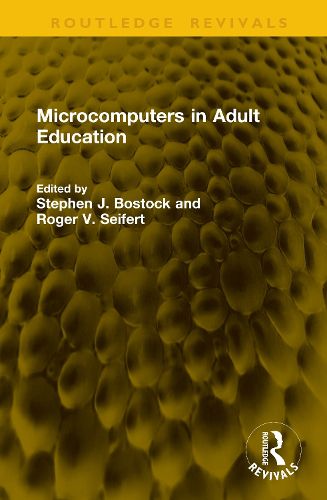
First published in 1986, Microcomputers in Adult Education examines the diverse applications and implications of microcomputers in adult learning. It explores both practical and theoretical aspects, including hardware selection, software development, and pedagogical applications, offering a detailed look at how technology was integrated into adult education.
The book begins by defining 'computer literacy' and analysing the suitability of various types of computer assistance for adult learning. It addresses key topics such as the use of computers by the elderly, the relationship between information technology and gender, and the role of microcomputers in community education and adult basic education. It also discusses the educational use of personal computers in both formal courses and informal learning contexts.
With chapters focusing on specialist audiences like managers, professionals, and student teachers, as well as practical experiences in organising computer courses for the general public, this book provides a rich historical perspective on the development of educational technology and its impact on adult education.
$9.00 standard shipping within Australia
FREE standard shipping within Australia for orders over $100.00
Express & International shipping calculated at checkout
Stock availability can be subject to change without notice. We recommend calling the shop or contacting our online team to check availability of low stock items. Please see our Shopping Online page for more details.
First published in 1986, Microcomputers in Adult Education examines the diverse applications and implications of microcomputers in adult learning. It explores both practical and theoretical aspects, including hardware selection, software development, and pedagogical applications, offering a detailed look at how technology was integrated into adult education.
The book begins by defining 'computer literacy' and analysing the suitability of various types of computer assistance for adult learning. It addresses key topics such as the use of computers by the elderly, the relationship between information technology and gender, and the role of microcomputers in community education and adult basic education. It also discusses the educational use of personal computers in both formal courses and informal learning contexts.
With chapters focusing on specialist audiences like managers, professionals, and student teachers, as well as practical experiences in organising computer courses for the general public, this book provides a rich historical perspective on the development of educational technology and its impact on adult education.
Search our extensive online catalogue.
