Readings Newsletter
Become a Readings Member to make your shopping experience even easier.
Sign in or sign up for free!
You’re not far away from qualifying for FREE standard shipping within Australia
You’ve qualified for FREE standard shipping within Australia
The cart is loading…


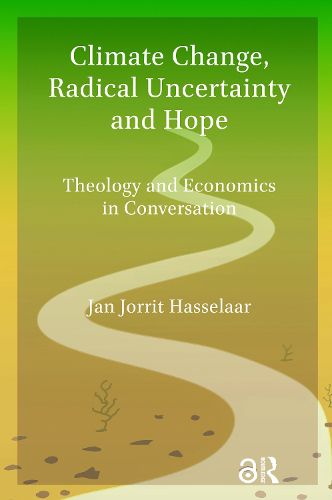
Views on climate change are often either pessimistic or optimistic. In this book Jan Jorrit Hasselaar discovers and explores a third way, one of hope. A debate within economics on risk and uncertainty brings him to theological questions and the concept of hope in the work of the late Jonathan Sacks-and to a renewed way of doing theology as an account of the good life. What follows is an equal conversation between theology and economics as has hardly been undertaken in recent times. It emerges that hope is not contrary to economic insights, but remarkably compatible with them. Communication between these fields of expertise can open the way for a courageous and creative embrace of radical uncertainty in climate change. A key notion here is that of a public Sabbath, or a 'workplace of hope'-times and places set aside to cultivate inspiration and mutual trust among all parties involved, enabling them to take concrete steps forward.
$9.00 standard shipping within Australia
FREE standard shipping within Australia for orders over $100.00
Express & International shipping calculated at checkout
Stock availability can be subject to change without notice. We recommend calling the shop or contacting our online team to check availability of low stock items. Please see our Shopping Online page for more details.
Views on climate change are often either pessimistic or optimistic. In this book Jan Jorrit Hasselaar discovers and explores a third way, one of hope. A debate within economics on risk and uncertainty brings him to theological questions and the concept of hope in the work of the late Jonathan Sacks-and to a renewed way of doing theology as an account of the good life. What follows is an equal conversation between theology and economics as has hardly been undertaken in recent times. It emerges that hope is not contrary to economic insights, but remarkably compatible with them. Communication between these fields of expertise can open the way for a courageous and creative embrace of radical uncertainty in climate change. A key notion here is that of a public Sabbath, or a 'workplace of hope'-times and places set aside to cultivate inspiration and mutual trust among all parties involved, enabling them to take concrete steps forward.
Search our extensive online catalogue.
